
Work boot fit and foot health explained clearly — how to measure your feet, choose the right width, get proper toe room, reduce heel slip, break boots in safely, and use socks, insoles, and lacing to stay comfortable through long shifts.
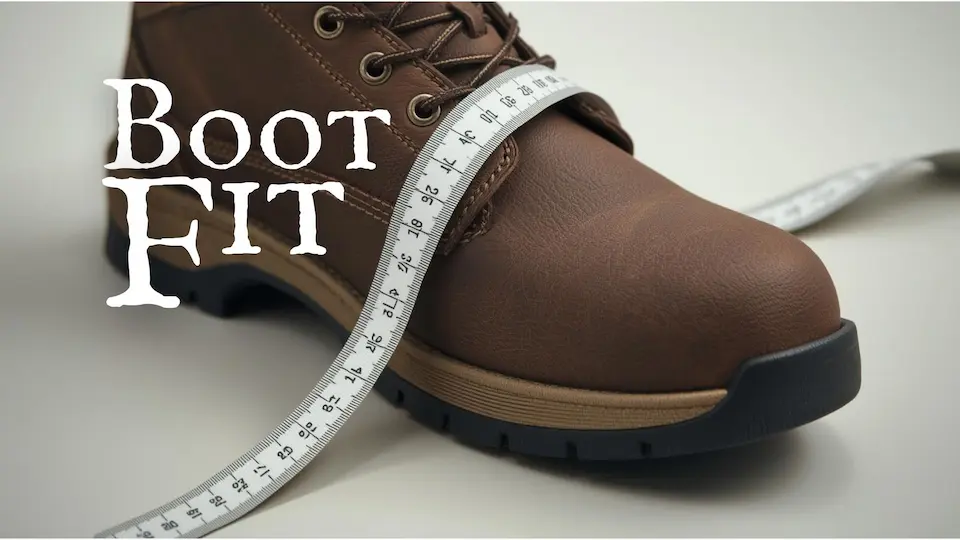
Fit Guide: Built for workers trying to solve toe pressure, heel slip, swelling, break-in pain, arch fatigue, and sizing confusion before it turns into blisters, numbness, or all-day discomfort.
Skip to quick answerThe right work boot fit does more than feel better. It helps reduce blisters, numb forefeet, heel rub, and end-of-shift fatigue. This guide covers how to measure your feet, choose the correct width, allow proper toe room, manage break-in, and use socks, insoles, and lacing to make a good boot fit better.
Why Trust This Guide
- Built around real fit problems like heel lift, forefoot pressure, cap contact, swelling, hot spots, and arch fatigue.
- Separates width problems from length problems so readers do not size up when they actually need a wider fit.
- Shows when socks, lacing, insoles, or break-in can solve the issue and when the boot is simply the wrong shape.
- Links out only where a more specialized guide genuinely solves the next problem.
How Should Work Boots Fit?
Quick Answer
Work boots should feel secure at the heel, wide enough through the forefoot, and long enough that your toes do not hit the cap when walking downhill or kneeling. Most fit mistakes come from confusing width problems with length problems, rushing break-in, or adding thick socks and insoles without accounting for the extra volume.
- Heel should feel locked in
- Forefoot should not feel pinched
- Toes need front clearance inside the cap
- Width problems usually need wider sizing, not more length
Start Here by Fit Problem
Pick the issue that sounds most like your boots and jump straight to the right fix.
Boot feels too tight
Check whether the problem is width, safety-cap pressure, sock thickness, or extra insole volume.
Go to WidthsToes hit the front
Use toe-room checks before deciding whether you need more length or just a different shape.
Go to Toe RoomHeel keeps slipping
Work out whether better lacing, break-in time, or a different last is the real answer.
Go to LacingBreak-in hurts too much
Separate normal stiffness from real fit problems before you keep forcing the boots.
Go to Break-InFeet hurt on concrete
Look at support, insole volume, heel hold, and underfoot cushioning instead of size alone.
Go to InsolesNot sure what size to order
Measure both feet, use the longer one, and compare against the chart with your sock setup in mind.
Go to MeasuringWhy Fit Matters
Good work boot fit affects safety, comfort, and how long the boots hold up under real use.
Safety
A cramped toe cap can bruise toenails and restrict natural movement. A sloppy heel increases friction, instability, and the chance of slips or blisters.
Comfort
The right width helps prevent numb forefeet, pressure at the cap edges, and the all-day ache that builds faster on concrete and hard shop floors.
Durability
A better fit reduces excessive movement inside the boot, helps limit premature crease stress, and can slow down wear at flex points and linings.
Measure Your Feet at Home
A quick measurement is better than guessing, especially if you order online or switch between brands.
Measure both feet while standing, not sitting. Feet spread under body weight, and one foot is often slightly larger than the other. Use the larger measurement when choosing your size.
2-Minute Fit Check
- Trace: Stand on paper with your heel against a wall and mark the longest toe.
- Measure length: Measure from the wall to the toe mark. Check both feet and use the longer one.
- Measure width: Wrap a soft tape around the widest part of your forefoot and use the larger measurement.
- Add toe-room allowance: Leave about 6 to 12 mm for front clearance inside safety caps.
- Re-check with your real setup: Measure again if you use custom insoles, winter socks, or toe warmers.
Important
If a boot feels tight because of sock thickness or an added insole, that is a volume issue as much as a size issue. Always judge fit with the setup you actually work in.
Widths: D, EE, and EEE
A lot of people size up when they actually need more width. That usually creates heel slip without solving forefoot pressure.
D (Standard)
Best starting point for average forefeet and most people who normally wear regular-width sneakers or work shoes.
EE (Wide)
Useful when the forefoot feels squeezed, the cap edges press the sides of your toes, or thicker work socks make the boot feel crowded.
EEE (Extra Wide)
Built for broader forefeet, strong toe splay, or work setups where thick socks and extra volume would otherwise pinch nerves and soft tissue.
If your toes graze the sides of the cap, not just the leather upper, go wider rather than longer. For help picking a forgiving fit, see our Work Boots for Sore, Tired Feet guide.
Toe Room and Safety Caps
Your toes need real front clearance inside the cap, not just enough room in the leather upper.
Quick Toe-Room Check
- Target: Leave about 6 to 12 mm of front clearance when standing.
- Test on the move: Walk downhill or simulate a ladder step. Your toes should not slam into the cap.
- Check the sides too: If the cap edges press your toes, that is usually a width problem.
- Composite toe: Often feels slightly roomier than steel and does not transfer cold as much.
If steel and composite fit differently, our different types of safety boots guide explains the tradeoffs between toe options, fit shape, and real-world comfort.
Break-In Plan
A good break-in should soften the boot gradually. It should not feel like you are fighting a bad fit for days.
Simple Break-In Method
- Start with 1 to 2 hours on easier duty and increase time gradually over the first few wears.
- Use your real work socks, not thinner socks that change the fit.
- Try a thin liner sock during the first week if friction is building.
- Flex the forefoot by hand before first wear to reduce stiffness at the bend point.
- Spot-treat hot spots early with tape or moleskin while the leather relaxes.
Important
Persistent heel rub usually means the heel is too loose, the last shape is wrong for your foot, or the lacing is not locking the rearfoot down properly. Break-in alone will not fix that.
Even a correctly sized boot can feel stiff and awkward during the first few wears, especially around the heel, forefoot, and ankle flex points. This guide explains how to break in work boots safely without confusing normal break-in stiffness with a genuinely bad fit.
Socks & Blister Prevention
Sock choice changes friction, moisture control, and internal volume more than many people expect.
A bad sock setup can make a decent-fitting work boot feel worse fast. Thick socks crowd the forefoot, sweaty socks increase rubbing, and the wrong fabric holds moisture against the skin for hours.
- Use wool or synthetic blends: They manage moisture better than basic cotton and reduce friction buildup during long shifts.
- Try a liner sock during break-in: A thin liner under a mid-weight work sock helps reduce hot spots while stiff boots soften.
- Change socks mid-shift if needed: A dry pair helps protect skin and keeps fit more stable on long or hot days.
- Act early on pressure points: Tape, moleskin, or anti-friction balm works better before the skin starts breaking down.
For breathable boot setups that reduce sweat buildup and friction during hot weather shifts, see our Best Work Boots for Sweaty Feet guide.
Insoles and Support
Insoles can improve comfort, but they also change internal volume. A support upgrade can create a fit problem if the boot was already tight.
- Concrete work: cushioned insoles reduce end-of-shift fatigue on hard floors.
- Plantar fasciitis: structured arch support helps reduce strain during repetitive steps.
- Flat feet: moderate support with stable heel hold works better than aggressive correction.
- Diabetic feet: choose pressure-relief setups that avoid seam friction and tight volume.
The main thing to remember is that every insole changes fit as well as support. A thick cushioned insert can make a boot feel tighter across the forefoot, lower over the toes, and looser at the heel if your foot sits higher than before. That is why a support fix only works properly when the boot still has enough internal volume for it.
If you are trying to improve comfort without ruining fit, start with lower-volume support options first. Our guides to work boot inserts and insoles for concrete floors break down which setups help with arch fatigue, heel pain, and hard-floor shock without crowding the boot too aggressively.
Signs Your Work Boots Are Too Small, Too Big, or Just Need Adjustment
Many work boot fit problems come from misreading the symptom. This quick table helps you tell the difference between a true size problem and something lacing, socks, or insoles can fix.
| What You Feel | Most Likely Cause | What to Try First |
|---|---|---|
| Toes hit the front when walking downhill | Boot is too short or the toe shape is wrong | Check front clearance standing up and consider a different length or roomier toe shape |
| Cap edges press the sides of your toes | Boot is too narrow | Try EE or EEE before sizing up in length |
| Heel lifts on stairs or ladders | Too much volume, poor heel lock, or wrong last shape | Try heel-lock lacing and review sock or insole volume |
| Top of foot feels sore under the tongue | Lacing pressure or low instep room | Try skip-eyelet or window lacing first |
| Boot feels fine in the morning but tight later in the day | Swelling, heat, thick socks, or limited forefoot room | Check width and judge fit later in the day, not just first thing |
| Arch feels worse after adding an insole | Support shape mismatch or lost internal volume | Use a lower-volume insole or reassess the support type |
Common Fit Problems Solved
If your work boots feel wrong in a specific way, these guides help you fix the real problem faster.
Lacing Techniques
Small lacing changes can fix heel lift, top-of-foot pressure, and instep pain without changing the actual boot size.
Heel Lock
Use a runner’s loop to pull the rearfoot in tighter and reduce heel lift on ladders, stairs, and uneven ground.
Skip Eyelet
Skip one pressure point if the top of the foot feels sore or crowded under the tongue.
Window Lacing
Create a gap over a tender instep area so the laces stop pressing directly on the sore spot.
Work Boot Sizing Chart
Use the chart as a starting point, then adjust for width, sock thickness, safety-toe shape, and any insole you plan to use.
| US | UK | EU | Foot Length (cm) |
|---|---|---|---|
| 7 | 6 | 39–40 | 25.0 |
| 8 | 7 | 41 | 26.0 |
| 9 | 8 | 42 | 27.0 |
| 10 | 9 | 43–44 | 28.0 |
| 11 | 10 | 44–45 | 28.8 |
| 12 | 11 | 46 | 29.6 |
| 13 | 12 | 47 | 30.4 |
How to Use This Chart Properly
- Use it as a starting point, not a guarantee. Brand lasts and toe-cap shapes vary a lot.
- If you are between sizes, check width first. Going longer when you really need more width often creates heel slip.
- Account for your real setup. Thick socks and aftermarket insoles can change fit more than people expect.
- Judge fit while standing. Feet spread under load, especially late in the day.
Charts vary by brand and last. If you are ordering online, always compare sizing advice with the return policy before guessing on fit.
FAQ
Should I size up or go wider if my toes touch the cap?
Go wider (EE/EEE) rather than longer if the cap edges press your forefoot. Lengthen only if your longest toe hits the front.
Are composite toes roomier than steel?
Many composite caps have a slightly fuller shape and don’t transfer cold. Fit varies by brand and last, so always test toe wiggle.
What insoles help on concrete all day?
Resilient foam with a defined heel cup and moderate arch usually works best. Replace insoles every 3–6 months for consistent cushioning.
How long should break-in take?
Usually a few short shifts over the first week. If hot spots persist after 10–12 hours of wear, revisit width or lacing.
What if my feet swell during long shifts?
Choose a wider toe box, breathable socks, and loosen laces after lunch to accommodate swelling.
How tight should work boots feel when new?
New work boots should feel secure and structured, not painfully tight. Your heel should stay in place, your forefoot should not feel pinched, and your toes should have front clearance inside the toe box or safety cap.
Should your toes touch the front of work boots?
No. Your toes should not touch the front during normal walking, downhill movement, or kneeling. Light contact at rest usually means the boots are too short or the toe shape is too restrictive.
What causes heel slip in work boots?
Heel slip usually comes from too much internal volume, the wrong last shape, loose lacing, or sizing up in length when the real problem is width. Better heel-lock lacing helps, but it does not fix a boot that is fundamentally the wrong shape.
This guide shares general fit and comfort tips. It’s not medical advice. If you have persistent pain, numbness, or circulation issues, consult a medical professional.