
Work boot safety standards explained in plain English — including ASTM F2413, I/75 C/75, EH, PR, Mt, CSA Z195, and EN ISO 20345 labels decoded so you can match the boot to the real hazard.
Reviewed for safety-label accuracy, hazard matching, toe protection types, electrical ratings, puncture resistance, and trade-specific footwear requirements.
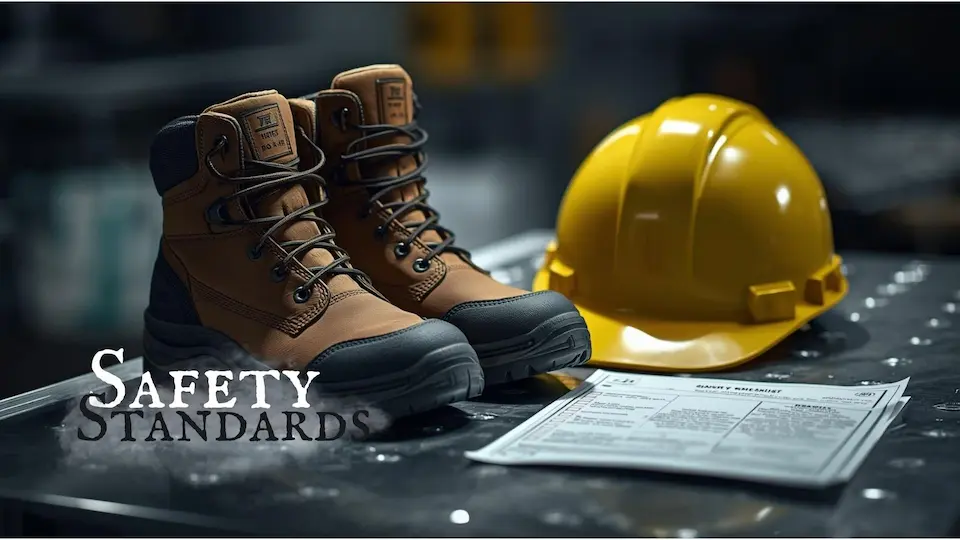
Standards Guide: Built for workers trying to decode labels fast and make sure the boot actually matches the hazard, not just the marketing.
Skip to label guideWhy Trust This Guide
- Explains ASTM, CSA, and EN ISO markings in plain English instead of manufacturer shorthand.
- Separates commonly confused categories like EH and ESD.
- Built around real hazard-matching questions workers actually have on site.
- Updated to support both buying decisions and PPE compliance checks.
What Do Work Boot Safety Labels Actually Mean?
Quick Answer
Work boot safety labels tell you what hazards the boot is tested for. In the U.S., ASTM F2413 is the main safety-footwear standard, while extra codes like EH, PR, and Mt tell you whether the boot adds electrical-hazard protection, puncture resistance, or metatarsal coverage. The real question is not just “is it safety rated?” but “is it rated for my actual hazard?”
- ASTM F2413 = core U.S. safety footwear standard
- I/75 C/75 = impact and compression toe protection
- EH = electrical hazard protection in dry conditions
- PR / Mt = puncture resistance and metatarsal protection
Work Boot Safety Label Cheat Sheet
Quick Reference
| Code | What It Means | When It Matters |
|---|---|---|
| ASTM F2413 | Main U.S. safety footwear standard | Baseline for most U.S. jobsite safety boots |
| I/75 | Impact protection rating | Falling or rolling object hazards |
| C/75 | Compression protection rating | Crushing hazards around heavy materials or equipment |
| EH | Electrical Hazard protection in dry conditions | Accidental contact risk around live circuits |
| PR | Puncture-resistant underfoot plate | Nails, sharp scrap, and debris underfoot |
| Mt | Metatarsal protection over the top of the foot | Falling tools, heavy impact, or hot drop hazards |
| CSA Z195 | Main Canadian safety footwear standard | Canadian jobsites and compliance checks |
| S1 / S1P / S3 | Common EU EN ISO footwear categories | European safety footwear selection |
Which Safety Ratings Do Most Jobs Need?
Fast Match
| Job or Hazard | Main Rating to Look For | Why It Matters |
|---|---|---|
| General construction | ASTM F2413 with I/75 C/75 | Covers common toe impact and compression hazards |
| Electrical exposure risk | EH | Adds secondary protection in dry conditions |
| Nails or sharp scrap underfoot | PR | Helps block punctures through the sole |
| Overhead impact hazards | Mt | Protects the top of the foot, not just the toe area |
| Cold-weather environments | Composite toe may improve comfort | Often feels warmer than steel in cold conditions |
How to Read the Safety Label on Your Boot
Most safety information is printed on the tongue label or stamped inside the boot. A typical U.S. label might look like this.
ASTM F2413-18
I/75 C/75  EH  PR  Mt
Quick label checklist: confirm ASTM F2413 plus the exact extras your site requires, such as EH, PR, or Mt. If the listing does not show the actual certification line or tongue tag, treat it as unverified until you see the label itself.
- ASTM F2413-18 is the version of the U.S. standard the boot is certified to.
- I/75 is the impact protection level.
- C/75 is the compression protection level.
- EH means Electrical Hazard protection in dry conditions.
- PR means puncture resistance underfoot.
- Mt means metatarsal protection over the top of the foot.
If you are still getting used to the terminology, see our glossary of safety shoe jargon for quick plain-English definitions.
ASTM F2413 (U.S.) — The Core Footwear Standard
ASTM F2413 is the main U.S. performance standard for safety footwear. When a site says “safety boots required,” this is usually the standard they mean.
Impact / Compression
- I/75 means impact resistance at level 75.
- C/75 means compression resistance at level 75.
- These usually appear together as I/75 C/75.
Electrical Hazard (EH)
- EH is secondary protection against accidental electrical contact in dry conditions.
- It does not replace electrical PPE, lockout procedures, or safe work practices.
Other Markings
- PR means a puncture-resistant midsole plate.
- Mt means metatarsal protection.
- Some labels also show static dissipative categories and conductance ranges.
Your employer’s PPE handbook should spell out the exact package required, for example ASTM F2413 with EH and PR.
For the official U.S. requirement baseline, see OSHA 29 CFR 1910.136 (Foot Protection).
ANSI Z41 vs ASTM F2413 — What’s the Difference?
ANSI Z41 was the older U.S. footwear standard before ASTM F2413 replaced it. You may still see ANSI on older boots, old manuals, or outdated listings, but ASTM F2413 is the current standard most U.S. worksites care about.
If a modern product page leans heavily on ANSI language without clearly showing ASTM F2413 certification, verify the actual label before buying.
Some Jobs Use Specialized Footwear Standards
Not every safety boot follows the same certification logic. Structural firefighting and wildland firefighting use more specialized footwear standards than general ASTM-rated jobsite boots, and the design priorities are very different.
If that applies to your work, compare our guides to NFPA certified firefighter boots and NFPA 1977 wildland fire boots for a practical look at how those standards differ from general work boot labeling.
EH vs. ESD — They Are Not the Same
These labels solve different problems. One is about accidental electrical contact risk. The other is about static control around sensitive equipment.
EH (Electrical Hazard)
EH footwear is designed to reduce the risk of electric shock from accidental contact with live circuits in dry conditions. It is secondary protection only. It does not replace proper electrical PPE, lockout procedures, or safe work practices.
ESD / SD (Electrostatic Dissipative)
ESD or SD footwear is built to control static discharge so sensitive electronics or equipment are protected. That is a very different goal from protecting the wearer against accidental electrical contact.
Plain-English rule: if you work around live circuits, you usually care about EH. If you work around sensitive electronic components, you usually care about ESD. Do not treat them as interchangeable.
If electrical exposure is part of your job, compare our guides to EH work boots for electricians and EH-rated lineman boots to see how this label shows up in real work footwear.
Puncture Resistance (PR)
PR means the boot includes a puncture-resistant plate underfoot to help block nails, sharp scrap, and other hazards from coming through the sole.
- Steel plate: very robust, but usually stiffer underfoot.
- Textile plate: lighter and often more flexible while still puncture rated.
- PR does not mean slip resistant. It is puncture protection, not traction.
If nails and scrap are part of your workday, compare our guides to roofing work boots and boots for pouring concrete for practical examples of where PR matters more than many product pages suggest.
Metatarsal Protection (Mt)
Mt means the boot protects the top of the foot as well as the toe area. It matters where falling tools, heavy impact, or hot material can land above the toe cap.
- Internal met guards: lower-profile fit with less snagging.
- External met guards: more coverage with a bulkier build.
If your work involves overhead impact or hot metal drop hazards, our metatarsal guard boot guide shows how Mt protection applies in real-world trade footwear.
Toe Caps: Steel vs. Alloy vs. Composite
If you are deciding between safety toe types, start with our plain-English guide to what a composite toe is and when it makes sense.
Steel
- Thinner cap and very strong.
- Transfers heat and cold.
- Often the most affordable.
Alloy
- Lighter than steel.
- Low-profile shape.
- Can transfer temperature and usually costs more.
Composite
- Non-metal and does not trigger detectors.
- Often feels warmer in cold weather.
- Can be slightly bulkier than steel.
CSA Z195 (Canada)
CSA Z195 is the Canadian safety-footwear standard. It covers toe protection, puncture resistance, electric shock resistance, and other protective categories used on Canadian worksites.
- Look for CSA marks indicating the exact protection provided.
- Some employers accept CSA or ASTM, but you should always confirm with your site rules.
EN ISO 20345 / 20347 (EU)
European footwear standards work differently from ASTM labels. EN ISO 20345 covers safety footwear with toe protection, while EN ISO 20347 covers occupational footwear without a safety toe.
| Code | Key Features (simplified) |
|---|---|
| S1 | Safety toe, closed heel, antistatic properties, heel energy absorption, fuel oil resistance. |
| S1P | S1 plus puncture resistance and protective midsole. |
| S2 | S1 plus water-resistant uppers. |
| S3 | S2 plus puncture resistance and cleated outsole. |
| SR / SRC | Slip resistance on tested surfaces. |
Manufacturers may also list CI (cold insulation), HRO (heat-resistant outsole), WR (waterproof), and other add-on properties.
Match Your Hazards to the Right Standards
Start with the actual hazard, then check whether the label matches it. That is the simplest way to avoid buying the wrong safety package.
| Hazard / Job | U.S. (ASTM) | Canada (CSA) | EU (EN ISO) |
|---|---|---|---|
| Falling or rolling objects | I/75 C/75 | Toe protection mark | S1, S2, S3 |
| Electrical shock risk in dry conditions | EH | Electric shock resistance mark | ESD and antistatic categories serve different purposes |
| Nails and sharp scrap underfoot | PR | Puncture resistant mark | S1P, S3 |
| Top-of-foot impact | Mt | Metatarsal protection mark | Met protection add-on |
| Wet or oily floors | Slip-resistant outsole | Slip resistance marking | SR, SRC |
Confirm the final requirement with your PPE handbook, employer, and local regulations.
In practical terms, most workers should start with the hazard, not the brand. If the risk is falling tools, focus first on the toe rating. If the risk is nails or sharp scrap, look for PR. If the risk is accidental electrical contact in dry conditions, look for EH. If the risk is top-of-foot impact, add Mt. That is the simplest way to avoid buying the wrong feature or missing the one that actually matters.
If you are still deciding what overall safety package makes sense, our guide to types of safety boots breaks down the main categories in a more buying-focused way.
Before You Buy: Check the Label, Not Just the Product Title
- Check the actual tongue label or inside stamp. Do not rely only on a vague product title or bullet list.
- Confirm ASTM F2413 first. Then check whether you also need EH, PR, or Mt.
- Match the label to the real hazard. A boot can be safety rated and still miss the one feature your site actually requires.
- Do not assume composite toe means EH. Toe material and electrical hazard protection are different things.
- Confirm with your PPE handbook. Site rules matter as much as the product page.
If you are shopping online and the listing is vague, our guide to the best place to buy work boots explains which retailers make it easier to verify real safety labeling before you commit.
FAQ
Common questions about work boot safety labels, hazard matching, and what the markings actually mean.
What does I/75 C/75 mean on work boots?
They are ASTM F2413 impact and compression ratings at level 75, showing protection against common falling and crushing hazards.
Is EH the same as ESD?
No. EH is intended to reduce shock risk for the wearer in dry conditions. ESD controls static to protect sensitive equipment.
Do I need PR boots for roofing?
PR is strongly recommended anywhere nails or sharp scrap are common, including roofing, demolition, and scrapyards.
Are composite toe boots safer than steel toes?
Both can meet the same ASTM impact and compression levels. Composite is non metal and often feels warmer in cold conditions. Steel is thinner and very strong. Choose based on hazards and site rules.
Does ASTM F2413 EH mean I’m safe around live electrical work?
No. EH is secondary protection in dry conditions for accidental contact. It does not replace electrical PPE, lockout practices, or jobsite safety procedures.