
Best inserts for work boots — shock-absorbing insoles, structured arch support, & deep heel stability built for long shifts on concrete, warehouses, & ladder-heavy trades.
Evaluated for heel impact control, arch alignment, and end-of-shift fatigue reduction during 10–12 hour workdays.
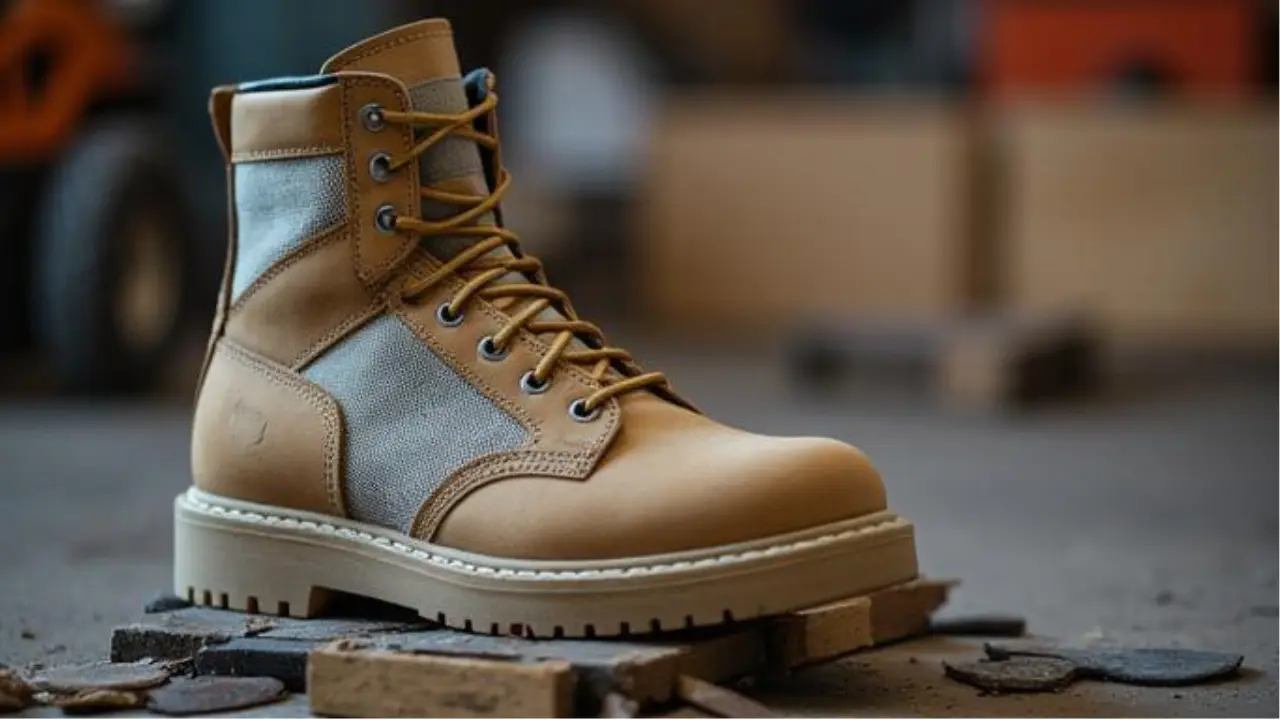
Jobsite-Tested: Picks vetted with concrete crews, warehouse teams, and ladder-heavy trades. We focused on heel strike, arch control, and end-of-shift fatigue.
Skip to #1 insert — Dr. Scholl’sThis guide covers general-purpose inserts for comfort and everyday use. If you’re working long hours on hard surfaces or using protective footwear, see our guides to insoles for concrete floors and insoles for work boots for more specific options.
When you’re spending 10–12 hours on unforgiving concrete or climbing ladders all day, boots alone often aren’t enough. The right work boot insoles add shock absorption, arch support, and heel stability so your feet and joints stay supported through long shifts.
The best inserts for work boots help control heel strike and reduce fatigue that travels up into the knees and lower back. Many workers also use insoles for safety shoes to improve comfort inside steel-toe or composite-toe boots without changing footwear.
If most of your day happens on hard slab surfaces, our guide to work boots designed for concrete floors explains how midsole firmness and heel structure affect fatigue during long standing shifts.
Why Trust This Guide
- Evaluated using shock-absorption, arch support, and heel stability criteria.
- Incorporates feedback from construction crews, warehouse workers, and delivery drivers who spend 8–12 hour shifts on hard floors.
- Focuses on insoles compatible with steel-toe and composite-toe safety boots.
- Updated twice per year to reflect product changes and worker feedback.
What Are the Best Insoles for Work Boots in 2026?
Quick Answer
The best insoles for work boots combine strong shock absorption, supportive arch structure, and a deep heel cup that stabilizes the foot during long shifts. Quality work boot inserts help reduce fatigue on hard floors by cushioning impact and improving alignment through the feet, knees, and lower back.
- Shock-absorbing heel cushioning
- Structured arch support
- Deep stabilizing heel cup
- Designed to fit safety-toe work boots
Insert Basics — What Matters for Work Boots
- Heel impact control: deep cups + denser foams soak up slab shock.
- Arch match: firm/posted for over-pronation; higher arch shells for high insteps.
- Energy return: cone or cell structures help on long walking routes.
- Volume & trim: remove OEM footbed; choose low/med/high volume to avoid toe rub.
- Cover & hygiene: moisture-wicking tops + antimicrobial help with sweat/odor.
Workers dealing with chronic foot fatigue may also want to look at boots designed for relief — our guide to work boots for sore feet explains which boot structures work best when paired with supportive insoles.
Insoles for Safety Boots vs Regular Work Boot Insoles
Not all aftermarket inserts are designed for safety footwear. Steel-toe and composite-toe boots have less interior space than regular shoes, which means the wrong insole can make the boot feel tight or push your toes into the protective cap.
Good insoles for safety boots are built with controlled thickness, supportive arch structure, and a deep heel cup that stabilizes the foot without taking up excessive volume. Many workers replace the thin factory footbed inside safety boots with a more supportive insert to improve shock absorption during long shifts.
If you wear steel-toe or composite-toe footwear daily, our dedicated guide to insoles designed specifically for safety shoes explains which models fit best inside protective work boots.
Who Benefits Most from Work Boot Insoles?
Supportive insoles are especially helpful for workers who spend long shifts on hard flooring. Trades that benefit the most include warehouse pickers, concrete crews, mechanics, delivery drivers, and retail staff standing all day.
For many workers, upgrading the insole inside an existing pair of boots can provide immediate comfort improvements without replacing the boot itself. Proper arch support and heel stabilization help distribute pressure more evenly across the foot.
Workers who walk several miles per shift—such as warehouse pickers—often benefit the most from supportive insoles. Our guide to work boots for warehouse pickers explains which boots pair best with fatigue-reducing inserts.
Best Insoles for Work Boots
The best insoles for work boots combine three things most stock boot footbeds lack: impact absorption, structured arch support, and a stable heel cup. On hard surfaces like concrete, these features help reduce fatigue that travels from the feet into the knees and lower back during 10–12 hour shifts.
Quality work boot insoles are designed to handle heavier loads than casual shoe inserts. Look for dense foam or polyurethane bases, reinforced arch plates, and deep heel cups that control foot motion inside steel-toe or composite-toe boots. Many workers also prefer moisture-wicking top covers that reduce sweat buildup during long shifts.
If most of your day is spent standing on slab or warehouse flooring, see our specialized guide to insoles designed specifically for concrete floors, which compares models built for maximum shock absorption on hard surfaces.
Match Your Job to the Right Insert
| Scenario | Prioritize | Good Matches |
|---|---|---|
| Heavier users / high impact on concrete | Reinforced arch + deep heel cup + dense foam | Dr. Scholl’s Heavy Duty, VALSOLE Heavy Duty |
| Plantar fasciitis / high arches | Rigid posting, structured heel cradle | VALSOLE Heavy Duty, Superfeet High Arch |
| All-day standing & walking routes | Energy-return geometry + breathable cover | Timberland PRO Anti-Fatigue |
| Budget comfort on hard floors | Gel heel/forefoot pads + easy trim | Dr. Scholl’s Work All-Day |
| Ladders / uneven footing | Deep heel cup + firm arch control | Superfeet High Arch |
- Dr. Scholl’s Heavy Duty: best overall for heavier users & concrete impact
- VALSOLE Heavy Duty: firm posting for arch pain & plantar fasciitis
- Timberland PRO Anti-Fatigue: energy return for long walking/standing
- Superfeet High Arch: ladder/stability control with deep heel cup
- Dr. Scholl’s Work: budget gel relief, easy trim & replace
Comparison Table
Best Inserts for Work Boots
| Product | Why it’s good | Best For | Price |
|---|---|---|---|
| Dr. Scholl’s Heavy Duty | Reinforced arch + deep heel cup for high-impact concrete days. | Men 200+ lb; slab shock; steel/composite toe boots | |
| VALSOLE Heavy Duty Orthotics | Rigid arch plate + cradle to tame plantar fasciitis & over-pronation. | High arches; arch pain; 220+ lb users | |
| Timberland PRO Anti-Fatigue | Geometric cones return energy; OrthoLite® top manages sweat. | Standing/walking routes; breathable comfort | |
| Superfeet All-Purpose High Arch | Deep heel cup + stabilizer cap for ladder and twisty tasks. | High arches; stability on ladders/uneven ground | |
| Dr. Scholl’s All-Day | Budget gel pads target heel/forefoot; easy trim-to-fit. | Retail/light duty; quick comfort upgrade |
Dr. Scholl’s Heavy Duty Support — Best Overall for Bigger Guys & Concrete Impact
TFF Rating:
Best For: men 200+ lb, long slab shifts, steel/composite toe boots.
Reinforced arch support, a deep heel cup, and dense foam take the sting out of concrete while keeping posture in check. Short break-in; medium-high volume fits best once the OEM footbed is removed.
Field notes: “10.5 hours on epoxy floor—heel bruise gone by day 3. Added a touch of height but toe room still fine after pulling the stock insole.”
Key Features:
- Reinforced arch shell for heavy loads
- Deep heel cup with shock-absorbing pad
- Dense midfoot foam for slab impact
Pros
- Excellent heel strike protection
- Supportive for heavier users
- Quick break-in
Cons
- Bulky for narrow/low-volume boots
- Not a high-arch specialist
- Toe rub: always remove OEM footbed first to keep cap clearance.
- Heat: air out between shifts; consider merino crews for sweat.
Fit & Volume: Med-High volume; choose by size, trim toe edge. Remove OEM insole.
Best For (recap): heavier workers on concrete needing heel impact control + stable arch.
VALSOLE Heavy Duty Support — Best for Arch Support & Pain Relief
TFF Rating:
Best For: high arches, plantar fasciitis, over-pronation.
Rigid arch plate and a structured heel cradle spread pressure and control motion. The EVA base cushions without feeling mushy—great for welders, delivery, or equipment ops who need firmer guidance.
Field notes: “Arch was assertive day 1; by day 3 the morning heel zap calmed down. Felt locked-in on ramps.”
Key Features:
- Rigid arch posting for pain relief
- Structured heel cradle for alignment
- Durable EVA base with shock pad
Pros
- Excellent arch control
- Good durability for heavier users
- Reduces plantar fascia load
Cons
- Stiff feel may not suit flat feet
- Short adjustment period
- Arch match: if between sizes or sensitive, start with shorter wear windows.
- Volume: remove OEM insole to avoid toe-cap contact.
Fit & Volume: Medium volume; sized, then trim toe. Remove stock footbed.
Best For (recap): targeted arch pain relief with firm posting.
Timberland PRO Anti-Fatigue — Best for Long Standing & Walking
TFF Rating:
Best For: routes, stocking, service calls where energy return matters more than rigid posting.
Geometric cone design compresses and rebounds to give a light “spring,” while OrthoLite® manages moisture. Neutral/medium arches get cushion without a bulky orthotic feel.
Field notes: “11k steps on concrete—less calf burn by hour 9. Breathes better than dense foam options.”
Key Features:
- Energy-return cone geometry
- OrthoLite® top for moisture control
- Lightweight, flexible ride
Pros
- Great walking comfort
- Breathable & easy to wear
- Fits most boots without crowding
Cons
- Not rigid enough for severe pronation
- May compress faster under heavy abuse
- Replace cycle: expect ~4–6 months with hard use; rotate pairs to extend life.
- Support needs: if knees cave in, step up to posted support (VALSOLE/Superfeet).
Fit & Volume: Medium volume; trim front edge; remove OEM insole.
Best For (recap): long walking/standing when you want cushion + bounce, not stiff posting.
Superfeet All-Purpose High Arch — Best for Stability & Ladder Work
TFF Rating:
Best For: high arches; twisty, uneven, or ladder-heavy tasks needing control.
Deep heel cup and a stabilizer cap trade plushness for alignment. Dense foam stays lively for months and resists bottoming out on hard floors.
Field notes: “Felt firm the first week; by week two my knees tracked straighter on ladder days.”
Key Features:
- Deep, structured heel cup
- Rigid arch posting for alignment
- High-density foam for longevity
Pros
- Excellent stability
- Durable under ladder/roof work
- Reduces chain fatigue
Cons
- Not “cushy” out of box
- Higher price vs. budget inserts
- Low arches: arch may feel aggressive; consider Timberland PRO or Dr. Scholl’s Work.
- Volume: remove OEM insole; check toe clearance in steel caps.
Fit & Volume: Med-High volume; choose by size then trim toe.
Best For (recap): high arches + stability on ladders or uneven surfaces.
Dr. Scholl’s Work All-Day — Best Budget Insert for Daily Use
TFF Rating:
Best For: retail, custodial, light-duty jobs needing quick relief on hard floors.
Dual-layer build (shock + comfort) and easy trim make these a simple upgrade when OEM footbeds are flat. Not as durable as pro models but very wallet-friendly to replace.
Field notes: “Cut to fit in 2 minutes—took the edge off tile right away. Needed a refresh after ~3 months of 50-hr weeks.”
Key Features:
- Gel pads at heel/forefoot
- Light arch ramp
- Trim-to-fit template
Pros
- Very affordable
- Comfortable out of the box
- Fits most boots easily
Cons
- Shorter lifespan under heavy use
- Limited arch control
- Heavy users: plan on a 2–3 month replacement cadence.
- Support needs: if knees collapse inward, step up to posted support.
Fit & Volume: Low-Med volume; trim toe; remove OEM footbed.
Best For (recap): budget comfort on hard floors with minimal fuss.
Quick Picks (TL;DR)
- Best overall (heavier users): Dr. Scholl’s Heavy Duty
- Best for arch pain: VALSOLE Heavy Duty
- Best for walking/standing: Timberland PRO Anti-Fatigue
- Best for high arches/stability: Superfeet High Arch
- Best budget: Dr. Scholl’s Work All-Day
Care & Maintenance for Inserts
- Air out daily: pull insoles post-shift; let foam rebound fully.
- Rotate pairs: alternate days to extend life (esp. EVA/PU foams).
- Clean gentle: hand-wash with mild soap; air dry flat. No heaters.
- Inspect compression: replace when heel cup flattens or arch loses “spring.”
- Replace cadence: budget gel 2–3 mo; posted/firm models 4–6+ mo depending on load/hours.
Proper drying and cleaning also extend insert life—see our work boot cleaning guide for safe methods.
Sock Pairing & Footcare
- Daily combo: merino-blend crew keeps sweat down in enclosed safety boots.
- Hot routes: ultralight moisture-wicking crews; change midday if damp.
- Blister prevention: liner sock or tape known hot-spots.
- Swelling: light compression crews reduce end-of-day puffiness.
- Nail/skin care: trim nails; moisturize heels to avoid fissures on slab miles.
- Best match: pair inserts with the right cushioning using our best socks for long shifts guide.
- No stacking: remove the OEM footbed; stacking lifts toes into the cap.
- Toe room: keep a thumb’s width at the front after the swap.
- PPE reality: insoles don’t replace ASTM F2413 toe/EH requirements—check the boot markings.
- ESD/antistatic: use insoles compatible with footwear ratings.
- Ongoing pain: if heel or arch pain persists, footwear—not just inserts—may be the issue. See our work boots for plantar fasciitis guide.
Safety & Standards
Inserts don’t replace PPE. If your site requires ASTM F2413 toe/EH protection, verify the boot carries the correct markings. Reference: OSHA Foot Protection (29 CFR 1910.136).
Final Verdict
Best overall: Dr. Scholl’s Heavy Duty Support. Arch pain: VALSOLE Heavy Duty. Standing/walking: Timberland PRO Anti-Fatigue. High arches & stability: Superfeet High Arch. Budget pick: Dr. Scholl’s Work All-Day.
FAQ — Inserts for Work Boots
Are insoles safe to use inside steel toe work boots?
Yes, as long as the insert replaces the factory footbed and does not raise your foot into the protective toe cap. Many workers add supportive insoles to steel-toe boots to improve cushioning and arch support during long shifts.
Can you put insoles on top of insoles in work boots?
No. Always remove the original footbed before installing new work boot insoles. Stacking inserts lifts your foot into the toe cap and causes rubbing, pressure points, and poor fit.
How do you choose the right insoles for work boots?
Look for three things: strong heel cushioning for impact, arch support that matches your foot shape, and the correct volume so your toes still have room inside safety toe boots.
How often should I replace inserts?
Budget gel: ~2–3 months. Firm posted/orthotic-style: ~4–6+ months. Heavy users or 60-hr weeks replace sooner.
Do inserts help knee and back pain?
Yes—better heel control and arch support improve alignment up the chain, often reducing knee/lower-back fatigue on hard floors.
Can I stack inserts over the OEM footbed?
No—never stack insoles inside work boots. Always remove the original factory footbed before installing aftermarket insoles. Stacking insoles raises your foot into the safety toe cap and can cause pressure points, rubbing, and poor fit inside steel-toe or composite-toe boots.
Which inserts are best for flat feet?
Try a supportive but not overly aggressive post first (Timberland PRO). If you still collapse, move to a firmer post like VALSOLE; severe cases may need custom orthotics.
What if I have diabetes?
Prioritize even pressure distribution and soft top covers; avoid hard edges. Consult your clinician for medical-grade options before using aftermarket inserts.
Will inserts make my work boots feel too tight?
They can if you stack them. Always remove the OEM footbed and choose the correct volume (low, medium, or high). Toe rub usually means excess thickness—not the insert itself.
How We Test — Hard-Floor Methodology & Scoring
We score on heel impact, arch control, forefoot cushion, all-day comfort, break-in, and volume fit inside common 6–8″ safety boots (soft/steel/composite). Surfaces: polished concrete, epoxy, tile, and open-grate steps.
| Model | Heel Impact | Arch Control | Forefoot Cushion | All-Day Comfort | Break-in | Volume |
|---|---|---|---|---|---|---|
| Dr. Scholl’s Heavy Duty | Excellent | Very Good | Very Good | Excellent | Short | Med-High |
| VALSOLE Heavy Duty | Very Good | Excellent | Good | Very Good | Short | Medium |
| Timberland PRO Anti-Fatigue | Very Good | Moderate | Very Good | Very Good | None | Medium |
| Superfeet High Arch | Very Good | Excellent | Moderate | Very Good | Short | Med-High |
| Dr. Scholl’s Work All-Day | Good | Light | Good | Good | None | Low-Med |
About the Author & Testing
Compiled by The Foot Facts with input from warehouse teams, delivery drivers, and ladder-heavy trades. We evaluate heel impact control, arch posting, energy return, sweat/odor management, and fit inside common work boots.
It’s not just your boots doing the work—your inserts take the hits your joints shouldn’t. Pick the right pair and you’ll feel it by hour ten.