
Best mechanic work boots for auto and diesel techs — oil-slip grip, waterproof steel/composite toe options, and all-day comfort built for epoxy floors and messy bays.
Evaluated for oil-slip grip, fluid resistance, kneeling comfort, ASTM safety toe requirements, and long-shift fatigue on epoxy and concrete shop floors.
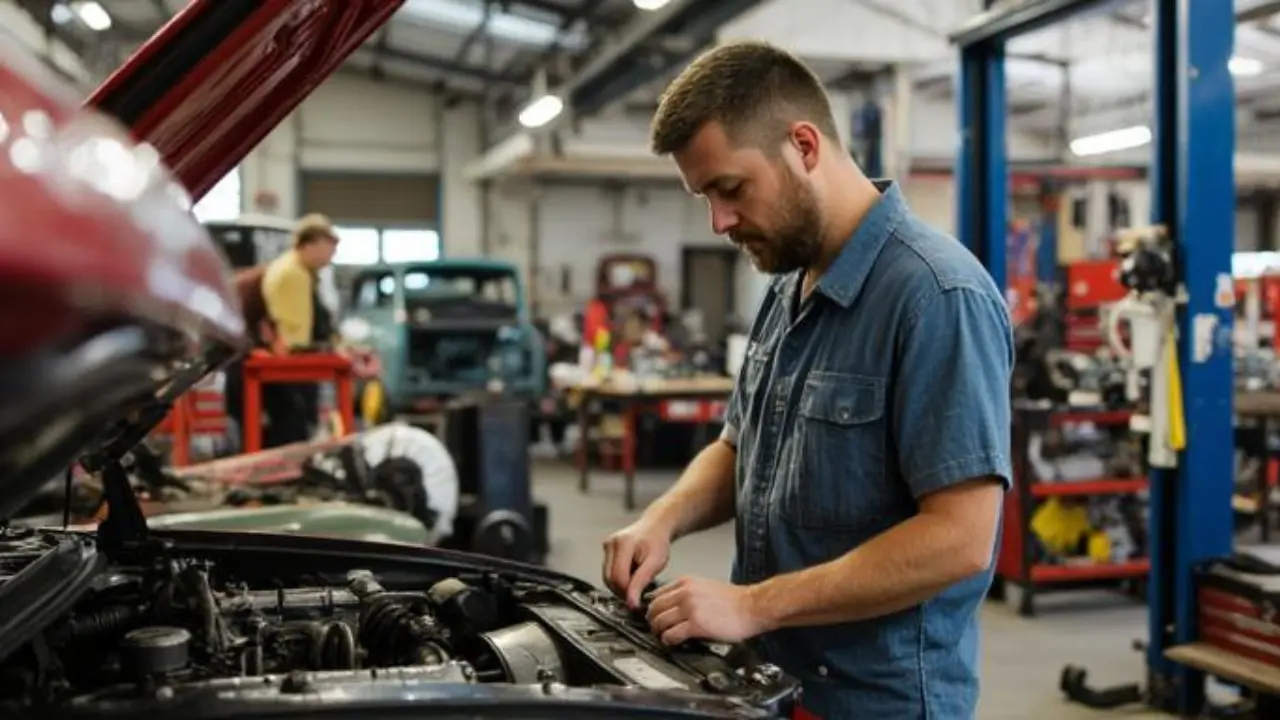
Mechanic-Tested: Picks that keep traction on oily epoxy, stay dry during washdowns, and go easy on your knees—without skipping EH safety.
Skip to #1 waterproof steel-toe pick — WolverineWhy Trust This Guide
- Evaluated using oil-slip traction, shop-floor comfort, kneeling support, and fluid-resistance criteria.
- Built around real mechanic scenarios including oily epoxy floors, washdowns, diesel service, and heavy parts handling.
- Safety specs checked against ASTM F2413 and EH requirements where relevant.
- Updated twice per year to reflect product changes and working-tech feedback.
If you’re sliding under cars, standing on epoxy floors, and dodging coolant and ATF all day, your boots need real traction and shop-proof durability.
- Oil-slip grip that holds on epoxy, tile, mats, and steel grates
- ASTM F2413 safety toe protection for dropped tools and parts
- EH-rated options for electrical hazard zones
- All-day comfort that reduces fatigue on concrete floors
- Fluid-resistant uppers that handle coolant, oil, and washdowns
The best and most reliable mechanic work boots balance traction, protection, and comfort without feeling like cinder blocks. Whether you work in automotive repair, diesel maintenance, or heavy equipment service, proper footwear lowers slip risk and keeps your knees and back from taking the hit by lunchtime.
Repeated heel strike on epoxy floors can travel upward into the knee joint. If discomfort is building, consider switching to knee-friendly work boots designed to improve shock control and rearfoot stability.
What Are the Best Mechanic Work Boots in 2026?
Quick Answer
The best mechanic work boots combine oil-resistant slip-resistant outsoles, ASTM F2413 safety toes, and cushioning that stays comfortable on concrete and epoxy floors. Mechanics working in wet bays or diesel environments usually benefit from waterproof leather, EH protection, and fluid-resistant uppers that hold up to coolant, oil, and washdowns.
- Oil-resistant slip grip for epoxy floors
- ASTM F2413 safety toe protection
- Waterproof or fluid-resistant uppers
- All-day comfort on concrete shop floors
What boots do professional mechanics actually wear?
Professional mechanics typically choose oil-resistant, ASTM-rated steel or composite toe boots with slip-resistant rubber outsoles. Waterproof leather models are common in diesel and heavy repair environments.
Working on hard shop floors all day can lead to fatigue building up quickly, especially if moisture and friction are not managed well. Comfort comes from more than just the boot itself. See our guide to work boots for sore feet and our recommendations for work socks for long shifts to improve overall comfort.
Are Mechanic Boots Different from Regular Work Boots?
Yes. Mechanic work boots are specifically built for oily, epoxy-coated shop floors rather than dirt, gravel, or framing lumber. They prioritize slip-resistant rubber compounds and fluid-resistant uppers over aggressive outdoor tread patterns.
Mechanic outsoles prioritize oil resistance, but roofing surfaces demand softer grip compounds. Compare rubber differences in our guide to roofing work boots for shingles.
Mechanic boots usually focus on slips, shop floors, and lighter waterproofing, but some workers also need tall pull-on protection for wet, dirty, hose-down tasks around outdoor equipment and yard work. For that kind of use, see our guide to rubber work boots for farm and wet-duty jobs.
Best Boots for Diesel Mechanics
Diesel mechanics often deal with heavier components, thicker fluids, and more frequent washdowns than light automotive techs. Look for waterproof leather, aggressive oil-resistant outsoles, and either steel or composite toes that meet ASTM F2413 standards. Extra cushioning helps during long engine rebuilds, while EH protection adds a safety buffer in high-voltage diagnostic environments.
Auto vs Diesel Mechanics — Does It Change Your Boot Choice?
Light automotive techs often prioritize lighter weight and flexibility for frequent movement between bays. Diesel mechanics typically benefit from heavier-duty waterproof leather, thicker outsoles, and added toe protection due to larger components and more fluid exposure.
Are Composite Toe Mechanic Boots a Good Choice?
Composite toe mechanic boots offer impact protection without the weight or temperature transfer of steel toes. They’re often lighter, non-metallic, and more comfortable during long shifts on concrete. For diesel and automotive technicians who move constantly between bays, composite toe models reduce fatigue while still meeting ASTM F2413 safety standards. They’re especially useful in cold climates where steel toes can feel icy during winter work.
Use-Case Matrix — Match Bays to Features
| Scenario | Prioritize | Toe / PPE | Good Matches |
|---|---|---|---|
| Constant oil/coolant on floors | Soft SR rubber, channeling tread | Steel/composite per policy | CAT Threshold, Wolverine Floorhand |
| Quick in/out of bays | Fast entry, wipe-clean leather | Soft toe or safety toe | SUREWAY Slip-On |
| Long shifts on concrete | Cushioning, anti-fatigue midsoles | Steel/comp or soft toe | Skechers Burgin, Floorhand |
| Budget but waterproof | Membrane + light build | Steel toe | NORTIV 8 |
Comparison Table — Best Mechanic Work Boots
| Product | Key Points | Best For | Price |
|---|---|---|---|
| SUREWAY Slip-On | Full-grain leather; slip-/oil-resistant; anti-static; water-resistant. | Fast on/off; oily floors | |
| Wolverine Floorhand | Waterproof leather; steel toe; SR lug outsole. | Wet/messy bays | |
| Skechers Burgin-Tarlac | Memory foam; steel toe; EH; SR outsole. | Concrete comfort | |
| CAT Threshold | Waterproof; steel toe; EH; excellent slip resistance. | Oily/wet floors | |
| NORTIV 8 | Waterproof; steel toe; light build; SR outsole. | Budget waterproof |
Choose the Right Mechanic Boot in 60 Seconds
- Pick Wolverine Floorhand if you want the best overall waterproof steel toe boot for wet, messy bays.
- Pick CAT Threshold if oily epoxy grip matters more than anything else.
- Pick Skechers Burgin if long-shift comfort on concrete is your top priority.
- Pick SUREWAY Slip-On if you want fast on and off access with easy wipe-clean leather.
- Pick NORTIV 8 if you want a lighter waterproof budget option with safety toe protection.
Who These Boots Are For
- Automotive mechanics working on oily epoxy or concrete shop floors
- Diesel techs dealing with heavier components, washdowns, and fluid exposure
- Technicians who need ASTM safety toes and optional EH protection in active bays
- Mechanics who want better all-day comfort without giving up traction and protection
Who These Boots Are Not Ideal For
- Workers who spend most of the day outdoors on dirt, gravel, or muddy job sites
- People wanting ultra-light sneaker-style safety shoes for dry indoor work only
- Trades where softer wedge soles matter more than oil-slip grip
- Users who do not need shop-friendly fluid resistance or safety-toe protection
If most of your work happens on dry warehouse floors or involves more walking than shop-floor exposure, lighter warehouse work boots or more cushioned boots for standing on concrete floors may be a better fit.
What Mechanics Need
(Auto, Diesel & Heavy Equipment)
- Traction on oil: soft, slip-/oil-resistant rubber with wide contact patches for epoxy, tile, and wet concrete. See our guide on the best slip-resistant steel toe work boots for additional grip comparisons.
- Impact & EH: ASTM F2413 steel/aluminum/composite toe as required; EH for electrical hazard zones.
- Fluid defense: waterproof or at least water-resistant uppers/linings; easy to clean after coolant/oil.
- Kneeling comfort: shock-diffusing midsoles and toe caps that don’t pinch when squatting.
- Weight & mobility: lighter builds help during constant in/out of bays and lift steps.
- Fit: locked heel, roomy toe (swelling on long shifts); pull-on for speed or lace for ankle lock.
Mechanics working on heavy equipment or servicing vehicles in outdoor industrial yards often need taller pull-on designs with stronger outsole grip than standard shop footwear. In these environments, some crews prefer specialized oilfield work boots built for mud exposure, uneven terrain, and long-distance walking between service areas.
More Work Boot Guides for Mechanics
If you’re comparing options beyond standard mechanic boots, these guides may help depending on your shop conditions:
- Metatarsal Guard Work Boots – extra protection for heavy parts handling.
- Best Work Boots for Standing on Concrete – for long diagnostic shifts.
- Most Breathable Steel Toe Boots – for hot summer bays.
- Best Boots for Sweaty Feet – moisture control in warm shops.
↓ Scroll for hands-on field-tested reviews ↓
SUREWAY Men’s Slip-On — Best for Quick Access & Oil-Resistant Grip
TFF Rating:
Best For: techs bouncing between bays who want fast on/off, oil-slip grip, and easy cleaning.
Full-grain leather over a slip-/oil-resistant sole with anti-static properties for shop electronics. Water-resistant (not full WP). Runs a bit large and less ankle lock than laces.
Field notes: “Wipe them, back to work—solid grip on epoxy after coolant spills.”
Key Features:
- Full-grain leather; Goodyear welt feel
- Slip-/oil-resistant sole (anti-static)
- Water-resistant upper
- Slip-on convenience
Pros
- Fast on/off
- Good oily-floor grip
- Easy to wipe clean
Cons
- Less ankle support
- Runs large—consider ½ down
- Ladders: monitor heel lift on rungs; snug socks/insoles help.
- Fluids: re-proof seams monthly with a water-repellent spray.
Sizing & Fit: Roomy; consider down ½ size.
Best For (recap): fast entry, oily floors, wipe-clean convenience.
Wolverine Floorhand (WP Steel Toe) — Best for Messy, Wet Workspaces
TFF Rating:
Best For: fully waterproof protection with dependable oil slip and steel toe safety.
Full-grain waterproof leather, ASTM steel toe, and an SR lug outsole that grips slick tile and mats. Break-in is short; watch outsole wear with heavy use.
Field notes: “Brake fluid everywhere—socks stayed dry; grip was predictable on epoxy.”
Key Features:
- Waterproof leather membrane
- ASTM steel toe (EH)
- Slip-resistant lug outsole
- Lightweight build for a WP steel toe
Pros
- Truly waterproof
- Solid oil/wet grip
- Comfort improves fast
Cons
- Outsole can wear faster
- Heavier than soft-toe picks
- Outsole wear: softer lugs can smooth quicker under constant epoxy/oil—monitor and rotate.
- Weight: slightly heavier; swap insoles for added rebound if knees get sore.
Sizing & Fit: True to size; D/EE available.
Best For (recap): wet/messy bays needing waterproof + steel toe.
Skechers Burgin-Tarlac — Best for All-Day Cushioning
TFF Rating:
Best For: concrete comfort with steel toe + EH and a sneaker-like feel.
Memory-foam footbed eases long stands on concrete/epoxy. ASTM steel toe + EH + SR outsole. Not waterproof; synthetic upper trades some lifespan for flexibility.
Field notes: “Zero break-in; foam saved my knees by hour 9.”
Key Features:
- Memory-foam comfort insole
- ASTM steel toe + EH
- Slip-resistant outsole
- Light, flexible build
Pros
- Excellent underfoot comfort
- Light and flexible
- Good value
Cons
- Not waterproof
- Synthetic upper scuffs sooner
- Durability: synthetic overlays can abrade faster on sharp edges—tape edges on creepers.
- Fluids: avoid standing spills; consider a spray-on protector to resist soaking.
Sizing & Fit: True; medium width.
Best For (recap): all-day concrete comfort when water isn’t a concern.
CAT Threshold (WP Steel Toe) — Best for Slick Floors & Tough Jobs
TFF Rating:
Best For: max oily-floor grip with waterproofing and EH certification.
CAT’s SR outsole bites on messy floors; waterproof leather + ASTM steel toe. Break-in is real; toe box can feel snug—test in work socks.
Field notes: “Coolant spill? Kept traction. Feet stayed dry on washdown.”
Key Features:
- Waterproof leather
- ASTM steel toe + EH
- High-traction SR outsole
- Durable shop-ready build
Pros
- Top-tier slip resistance
- Waterproof + EH
- Protective, durable
Cons
- Break-in period
- Snug toe box for wides
- Break-in: use thin socks first week; condition leather lightly to speed flex.
- Flex: stiffer shank can pinch when deep-squatting—loosen forefoot lacing a notch.
Sizing & Fit: True; consider Wide if between sizes.
Best For (recap): slick epoxy floors and washdown areas needing maximum grip.
NORTIV 8 (WP Steel Toe) — Best Lightweight Budget Pick
TFF Rating:
Best For: budget-friendly waterproofing with steel toe in a light, flexible package.
Surprisingly comfy out of the box; waterproof with SR tread and breathable lining. Build quality is mid-tier—great as a first pair or backup.
Field notes: “Light on the feet; fine traction on greasy spots.”
Key Features:
- Waterproof membrane
- Steel toe (ASTM)
- Breathable mesh lining
- Slip-resistant outsole
Pros
- Lightweight for steel toe
- Waterproof on a budget
- Good grip
Cons
- Average longevity
- Less cushion than premium
- Glue lines: avoid harsh solvents; wipe with mild soap to protect bonding.
- Support: add aftermarket insoles if you’re on concrete 10+ hours.
Sizing & Fit: True to size; standard width.
Best For (recap): budget WP steel toe that stays light and flexible.
Quick Picks (TL;DR)
- Wet/messy bays: Wolverine Floorhand
- Fast on/off: SUREWAY Slip-On
- All-day cushion: Skechers Burgin
- Slick epoxy floors: CAT Threshold
- Budget waterproof: NORTIV 8
Care & Maintenance for Shop Boots
- Oil control: wipe uppers/soles daily—oil films polish rubber and kill grip.
- De-glaze tread: scrub with a crepe brush or mild degreaser weekly to restore bite.
- Waterproof upkeep: reproof seams every 4–6 weeks in wet seasons; avoid high heat on membranes. Full cleaning steps are covered in our work boot cleaning guide.
- Insoles: replace every 3–6 months (faster on concrete-heavy weeks).
- Solvent safety: keep brake-cleaner off glue lines; use soap + water first.
- Drying: low-heat boot dryer; pull insoles; skip direct heat.
Slip-On vs Lace-Up — Which Suits Your Bay?
| Style | Strengths | Trade-offs | Good Matches |
|---|---|---|---|
| Slip-On | Fast on/off, easy to wipe clean | Less ankle lock on ladders | SUREWAY Slip-On |
| Lace-Up | Better ankle support and fit tune | Slower entry, laces need upkeep | Wolverine Floorhand, CAT Threshold, NORTIV 8, Skechers Burgin |
Mechanic Work Boots vs Mechanic Work Shoes
Mechanic work boots provide better ankle support, thicker midsoles for concrete fatigue, and more durable oil-resistant outsoles for full-shift protection. Mechanic work shoes are lighter and cooler, making them suitable for quick-service bays or parts departments where mobility matters more than heavy protection.
If you frequently handle heavy parts, climb lifts, or work in wet washdown areas, boots are the safer choice. For lighter-duty automotive tasks in dry environments, safety-rated work shoes can be more comfortable and breathable.
- Verify ASTM F2413 on your exact SKU and EH if you’re around diagnostics/battery work.
- Clean soles before ladders or lift steps—oil film = slip risk.
- Use met-guard models for frequent heavy-part handling.
- Follow shop lockout, jack-stand, and spill protocols.
Pro Tips for Mechanics
- Grip first: choose soft SR rubber; replace when lugs glaze over from oil.
- Fluids: rinse off coolant/oil ASAP; avoid harsh solvents on glue lines.
- Insoles: swap every 3–6 months—concrete kills cushioning fast.
- Rotate pairs: alternate WP and breathable days to reduce odor and fatigue.
- Laces: keep spares; oil can weaken fibers over time.
Sock Pairing & Footcare (Mechanics)
- Daily: merino-blend crews manage sweat and reduce blisters on epoxy.
- Hot bays: ultralight merino/cool-max; avoid cotton (holds sweat → friction).
- Concrete fatigue: cushioned heels + arch support insoles.
- Fit rule: thumb’s width at the toe; check with your thickest work socks.
Safety & Standards
In shops with impact and electrical risks, verify ASTM F2413 on your exact model and look for EH where appropriate. See OSHA Foot Protection (29 CFR 1910.136).
Final Verdict
Best overall (wet bays + protection): Wolverine Floorhand. Fast on/off: SUREWAY Slip-On. All-day cushion: Skechers Burgin. Max oil grip + WP: CAT Threshold. Budget WP steel toe: NORTIV 8.
FAQ — Mechanic Work Boots
Click a question to expand.
Do I really need waterproof boots in a garage?
If you’re around washdowns, leaks, and detailing, yes—waterproof helps. For dry bays, water-resistant leather can be cooler; keep a WP pair for spill days.
Steel vs composite toes for mechanics?
Steel is compact and classic; composite trims weight and won’t transfer temp as much. Both meet ASTM if rated—follow shop policy.
What outsole grips best on oily epoxy?
Soft slip-resistant rubber with siping and wide contact patches. Replace when the surface polishes smooth.
Are slip-ons safe enough for shop work?
Yes if the fit is snug with a locked heel and SR outsole. For ladders or heavy carries, lace-ups give better ankle control.
How do I keep boots from smelling?
Rotate pairs, pull insoles nightly, use low-heat boot dryers, and wear merino socks. Clean/oil leather monthly.
How often should insoles be replaced?
Every 3–6 months on concrete-heavy shifts or when heel pads feel “dead.”
Do mechanics need EH-rated boots?
If you’re around diagnostics, battery systems, or welders, EH adds a safety buffer. Pair with shop electrical safety protocols.
What’s best for kneeling and squatting all day?
Rounded toe caps + cushioned midsoles. Wedge soles reduce forefoot pinch; loosen the bottom lace row for deep squats.
Are metatarsal guards worth it?
Useful if you lift heavy parts (rotors, diffs, transmissions). They protect the instep where standard safety toes stop.
How can I make boots last longer in a garage?
Wipe oils daily, condition monthly, avoid harsh solvents, and rotate pairs. Boot dryers extend liner life and cut odor.
How We Test — Oil, Epoxy & Lifts
We test on oily epoxy, wet concrete, rubber mats, and steel steps. Scores blend on-foot wear, spec checks, and mechanic feedback. We weight slip grip, impact/EH, fluid resistance, cushioning, and weight.
| Model | Oil Grip | Waterproof | All-Day Comfort | Break-in | Weight |
|---|---|---|---|---|---|
| SUREWAY Slip-On | Very Good | Water-resistant | Good | Short | Light |
| Wolverine Floorhand | Very Good | Waterproof | Very Good | Short | Moderate |
| Skechers Burgin | Good | Non-WP | Excellent (memory foam) | None | Light |
| CAT Threshold | Excellent | Waterproof | Good | Moderate | Moderate |
| NORTIV 8 | Very Good | Waterproof | Good | None | Light |
Why You Can Trust Our Recommendations
Our recommendations are based on hands-on wear testing, manufacturer spec verification, and feedback from working automotive and diesel technicians. We prioritize slip resistance on oily epoxy floors, verified ASTM safety ratings, and long-shift comfort over marketing claims.
About the Author & Testing
Compiled by The Foot Facts with input from auto and diesel techs. We evaluate slip grip, waterproofing, impact/EH, cushioning, and fit with shop wear-testing where noted.
Reviewed by: Working automotive and diesel technicians for real-world shop validation.