
Best insoles for safety shoes — shock-absorbing inserts, structured arch support, and low-volume designs that fit comfortably inside steel-toe and composite-toe work boots.
Evaluated for heel impact control, arch support, and fit compatibility inside safety-toes during 10–12 hour shifts.
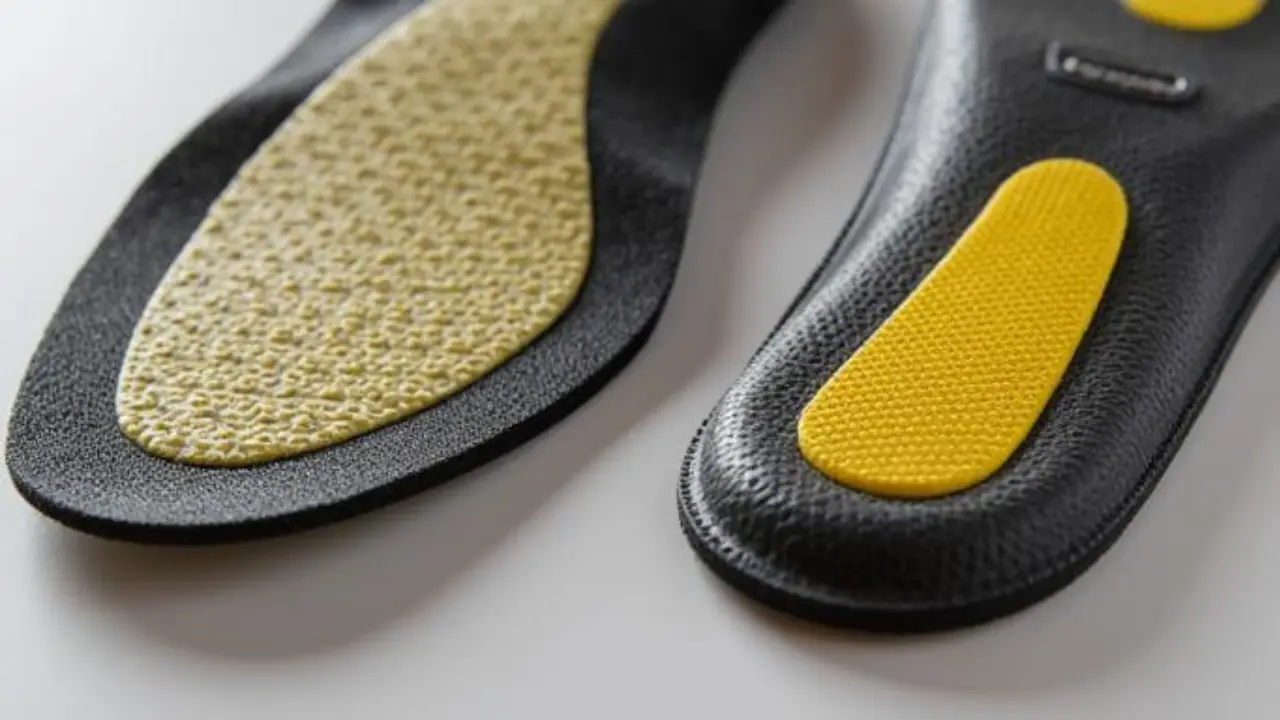
This guide focuses specifically on insoles designed for safety shoes and steel-toe boots, where interior space is limited and toe-cap clearance must be preserved.
Work-Shift Tested: Picks chosen for compatibility inside steel-toe and composite-toe work boots worn during 8–12 hour shifts.
Skip to #1 insole — Dr. Scholl’sSafety boots protect your toes, but the rigid protective cap and firm outsole can make long shifts uncomfortable. This guide focuses specifically on insoles for safety shoes and steel-toe boots, where interior space is limited and toe-cap clearance has to be preserved.
The best insoles for steel toe boots add shock absorption, arch support, and heel stability without lifting your toes into the protective cap. That low-volume fit matters more here than it does in regular soft-toe work boots.
If you need general work boot inserts for comfort, concrete floors, and heavy trades, see our guide to work boot insoles. If your main problem is hard-floor fatigue, also compare our guide to insoles for concrete floors.
Mechanics, warehouse workers, drivers, and construction crews often notice stock insoles breaking down fast. If you are comparing footwear as well as inserts, these mechanic work boots and trucker work boots show where better boot cushioning can help before adding an aftermarket insole.
Why Trust This Guide
- Evaluated using shock-absorption, arch support, and heel stability criteria.
- Includes feedback from warehouse workers, construction crews, and trades wearing steel-toe boots daily.
- Focuses on inserts compatible with steel-toe and composite-toe safety footwear.
- Updated twice per year to reflect product changes and worker feedback.
What Are the Best Insoles for Safety Shoes in 2026?
Quick Answer
The best insoles for safety shoes combine strong shock absorption, structured arch support, and a deep heel cup that stabilizes the foot during long work shifts. Quality inserts help reduce fatigue on concrete floors while maintaining enough space inside steel-toe or composite-toe boots.
- Shock-absorbing heel cushioning
- Structured arch support
- Deep stabilizing heel cup
- Low-volume design for steel-toe boots
Insert Basics for Safety Boots
Safety boots are built differently than regular footwear. Steel-toe and composite-toe boots often have less interior space, thicker midsoles, and rigid safety caps that can amplify pressure on the forefoot during long shifts.
Because of this, the best insoles for safety shoes must balance cushioning with controlled thickness. Inserts that are too soft or too bulky can raise your foot into the protective toe cap and create pressure points inside the boot.
Quality insoles for steel toe boots usually focus on three key features: shock-absorbing heel cushioning, structured arch support, and a stabilizing heel cup that keeps the foot aligned during long standing or walking shifts.
- Low-volume design so the insert fits inside steel-toe boots without crowding the toe box
- Shock-absorbing heel cushioning to reduce impact on concrete floors
- Structured arch support that helps stabilize the foot during long shifts
- Deep heel cup to prevent foot movement inside safety boots
Truck drivers often deal with a rough combination of long seated hours, repeated cab entry, and walking on hard loading docks. If that sounds familiar, these safety shoes for truck drivers show which boot styles already offer better cushioning and where a supportive insole can make long shifts easier on the feet.
Best Insoles for Steel Toe Boots
Workers who wear safety boots all day often upgrade the factory footbed with a more supportive insert. The best insoles for steel toe boots provide shock absorption, arch stability, and heel support while maintaining enough interior space inside the boot.
Below are some of the most reliable insoles for safety shoes used by warehouse workers, construction crews, and trades who spend long shifts on concrete floors.
Comparison Table
Best Insoles for Safety Shoes & Steel Toe Boots
Use this table to compare safety-shoe insoles by support type, fit volume, cushioning style, and best use before reading the full reviews below.
| Product | Why it’s good | Best For | Price |
|---|---|---|---|
| Best Overall Dr. Scholl’s Heavy Duty Support | Designed for workers over 200 lbs; reinforced arch support and shock-absorbing heel cushioning. | Long shifts on concrete floors | |
| Best Arch Support Superfeet Green | High-density foam and stabilizing heel cup for strong arch support. | Workers needing firm arch stability | |
| Best Concrete Comfort Timberland PRO Anti-Fatigue | Anti-Fatigue Technology foam designed to absorb shock during long standing shifts. | Construction and warehouse work | |
| Best Budget Dr. Scholl’s Work Massaging Gel | Gel cushioning designed to reduce fatigue during long hours standing. | Budget comfort upgrade | |
| Best Balanced Support Powerstep Pinnacle Work | Firm arch support with deep heel cradle for improved foot alignment. | Flat feet or plantar fasciitis support |
Full Reviews Below: Use the comparison table above for a quick shortlist, then read the full reviews below for fit notes, toe-cap clearance warnings, arch support feel, and where each insole works best inside steel-toe or composite-toe boots.
Many workers combine supportive inserts with boots designed for long standing shifts. If your job involves hard floors or warehouse work, see our guide to work boots for standing on concrete floors.
Dr. Scholl’s Heavy Duty Support — Best Overall for Steel Toe Boots
TFF Rating:
Best For: workers spending long shifts standing or walking in steel-toe boots on hard floors.
Dr. Scholl’s Heavy Duty Support insoles are designed specifically for workers who spend long hours on concrete or industrial floors. The reinforced arch support and deep heel cushioning help absorb impact inside rigid safety boots, which often lack cushioning from the factory.
These inserts are built for heavier users and long workdays, making them a popular upgrade for steel-toe boots that feel flat or harsh after several months of use.
Field notes: “Installed in steel-toe warehouse boots. Heel fatigue dropped noticeably by the middle of the shift and the arch support felt stable even after 10 hours.”
Key Features:
- Reinforced arch support platform
- Shock-absorbing heel cushioning
- Trim-to-fit sizing for safety boots
Pros
- Strong shock absorption for concrete floors
- Good arch support for long shifts
- Easy to trim and install in work boots
Cons
- Too thick for some low-volume boots
- Arch support may feel firm at first
- Tight safety boots: remove the factory footbed before installing to avoid toe pressure.
- Heavy sweat conditions: allow insoles to air dry between shifts to prevent odor buildup.
Fit & Volume: Medium-high volume; best used after removing the stock boot insole. Trim toe area to match your boot size.
Best For (recap): steel-toe boots that feel harsh on concrete or warehouse floors during long shifts.
Superfeet Green — Best for Strong Arch Support in Safety Boots
TFF Rating:
Best For: workers needing firm arch support and alignment inside steel-toe work boots.
Superfeet Green insoles are known for their rigid support structure and deep heel cup. Instead of soft cushioning alone, they stabilize the foot and help control over-pronation during long standing or walking shifts.
This makes them popular among construction workers and warehouse employees who spend entire days on hard surfaces where foot alignment can affect knees and lower back comfort.
Field notes: “Firmer than most inserts, but once broken in they stabilize the foot well on concrete floors and reduce that end-of-shift wobble.”
Key Features:
- Deep stabilizing heel cup
- Rigid arch support structure
- High-density foam for durability
Pros
- Excellent arch control
- Very durable under heavy use
- Improves posture and foot stability
Cons
- Feels firm during break-in
- More expensive than basic inserts
- Flat feet: high arch support may feel aggressive for some users.
- Low-volume boots: remove factory footbed to create space.
Fit & Volume: Medium-high volume; designed to replace the factory insole in most work boots.
Best For (recap): workers needing strong arch stability during long concrete shifts.
Timberland PRO Anti-Fatigue — Best for Concrete Worksites
TFF Rating:
Best For: construction and warehouse workers who stand for long hours on concrete.
Timberland PRO Anti-Fatigue insoles use a geometric foam structure designed to absorb shock and return energy during long shifts. This helps reduce foot fatigue when working on hard industrial floors.
They are designed specifically for work boots and safety footwear, making them a natural upgrade for Timberland PRO boots or similar work footwear.
Field notes: “Concrete job site with steel toes—noticeably less heel sting and better overall comfort during 10-hour shifts.”
Key Features:
- Anti-Fatigue Technology foam
- Shock-absorbing heel structure
- Breathable top cover
Pros
- Very comfortable on hard surfaces
- Good shock absorption
- Designed for work boots
Cons
- Arch support is moderate
- May compress faster under heavy users
- Severe arch issues: may require firmer arch support models.
- Very tight boots: ensure the factory footbed is removed.
Fit & Volume: Medium volume; fits most safety boots when replacing stock insoles.
Best For (recap): workers dealing with concrete fatigue and long standing shifts.
Dr. Scholl’s Work Massaging Gel — Best Budget Comfort Upgrade
TFF Rating:
Best For: workers wanting inexpensive cushioning inside steel-toe boots.
Dr. Scholl’s Work Massaging Gel insoles focus on simple comfort and shock absorption. Gel pads in the heel and forefoot help reduce impact from walking and standing on hard floors.
They are widely available and inexpensive, making them a common upgrade when factory insoles start to flatten out.
Field notes: “Not heavy arch support, but noticeably softer under the heel during long warehouse shifts.”
Key Features:
- Dual gel cushioning pads
- Shock-absorbing design
- Trim-to-fit sizing
Pros
- Very affordable
- Easy to install
- Comfortable cushioning
Cons
- Limited arch support
- Shorter lifespan under heavy use
- Heavy users: may compress faster than premium insoles.
- High arches: consider a model with stronger support.
Fit & Volume: Medium volume; trim to size for most work boots.
Best For (recap): inexpensive comfort upgrade for safety boots.
Powerstep Pinnacle Work — Best for Balanced Cushion & Support
TFF Rating:
Best For: workers wanting balanced cushioning and arch support inside safety boots.
Powerstep Pinnacle Work insoles combine dual-layer cushioning with a semi-rigid arch support platform. This helps absorb impact while stabilizing the foot during long shifts on concrete or industrial floors.
They are often recommended for workers dealing with foot fatigue or mild plantar fasciitis while wearing steel-toe work boots.
Field notes: “Balanced feel—soft enough for comfort but still supportive after 10 hours on hard floors.”
Key Features:
- Dual-layer EVA cushioning
- Semi-rigid arch support
- Deep heel cradle for stability
Pros
- Balanced cushion and support
- Good for long standing shifts
- Durable construction
Cons
- Higher price than budget models
- May feel firm for some users
- Very flat feet: arch support may feel noticeable initially.
- Low-volume footwear: remove factory insole before installing.
Fit & Volume: Medium volume; designed to replace the original boot insole.
Best For (recap): workers needing balanced comfort and arch stability.
Quick Picks — Best Insoles for Steel Toe Boots
- Best Overall: Dr. Scholl’s Heavy Duty Support — reliable shock absorption and strong arch support for long shifts.
- Best Arch Support: Superfeet Green — deep heel cup and rigid arch structure for better alignment.
- Best for Concrete Floors: Timberland PRO Anti-Fatigue — designed to reduce fatigue during long standing shifts.
- Best Budget Option: Dr. Scholl’s Work Massaging Gel — inexpensive comfort upgrade.
- Best Balanced Support: Powerstep Pinnacle Work — good balance of cushioning and structure.
Pro Tips for Choosing Insoles for Safety Boots
- Always remove the factory insole. Stacking insoles raises your foot into the steel toe cap and causes pressure points.
- Choose structured arch support for concrete floors. Soft cushioning alone often compresses quickly during long shifts.
- Look for deep heel cups. A stabilizing heel cup helps reduce foot movement inside safety boots.
- Replace insoles regularly. Heavy work shifts can flatten inserts within 4–6 months.
- Match volume to your boot. Low-volume boots require thinner inserts to prevent toe pressure.
Workers dealing with persistent heel pain may also benefit from footwear designed for additional support. Our guide to work boots for plantar fasciitis explains how supportive boots and inserts can reduce strain during long shifts.
Common Mistakes When Using Insoles in Safety Boots
- Stacking insoles. Always remove the factory footbed before installing aftermarket inserts.
- Choosing overly soft cushioning. Soft foam can collapse quickly during long shifts on concrete floors.
- Ignoring arch support. Proper arch support helps stabilize the foot and reduce fatigue.
- Using the wrong volume. Thick insoles can crowd steel-toe boots and cause toe pressure.
A lot of early boot pain is not just stiff leather. It is also underfoot fatigue, arch strain, and heel impact while the boot settles in. If you are trying to break in safety boots more comfortably, socks and insoles can make the process much easier.
Old or badly fitting inserts can do more than reduce comfort. They can also move against the footbed and create noise with every step. If that sounds familiar, this guide explains how to fix squeaky insoles in work boots before you assume the whole boot is the problem.
Safety & Standards
Insoles can improve comfort inside safety shoes, but they do not replace required PPE. If your workplace requires ASTM F2413 toe protection, EH protection, puncture resistance, or other safety ratings, verify those markings on the boot itself.
- No stacking: remove the factory footbed before adding aftermarket insoles.
- Toe-cap clearance: make sure your toes are not pressing into the steel or composite toe cap.
- Boot rating first: insoles do not add ASTM, EH, PR, or metatarsal protection to a non-rated boot.
- ESD or antistatic footwear: use insoles compatible with your workplace footwear requirements.
- Persistent pain: if heel, arch, or forefoot pain continues, the boot fit may be the bigger issue.
FAQ — Insoles for Safety Shoes
What are the best insoles for steel toe boots?
The best insoles for steel toe boots combine shock-absorbing heel cushioning, structured arch support, and a low-volume design that fits inside safety footwear without crowding the toe cap.
Can you put insoles in steel toe boots?
Yes. Most workers replace the factory footbed with supportive insoles to improve cushioning and arch support inside steel-toe boots.
Do insoles make safety boots more comfortable?
Yes. Quality insoles add shock absorption and arch support, which can reduce fatigue during long shifts on concrete floors.
Can you stack insoles in work boots?
No. Stacking insoles raises your foot into the toe cap and may cause pressure points inside steel-toe boots.
How often should work boot insoles be replaced?
Most workers replace insoles every 4–6 months depending on work conditions and hours spent on hard floors.
How We Evaluated These Insoles
These insoles were evaluated based on shock absorption, arch support structure, heel stability, and compatibility inside steel-toe and composite-toe work boots.
Field feedback from warehouse workers, construction crews, and industrial trades was also considered, especially for workers standing on concrete floors during 8–12 hour shifts.
Final Verdict
Safety boots protect your feet, but long shifts on hard surfaces can still cause fatigue. Upgrading the factory footbed with supportive insoles can significantly improve comfort and reduce impact during long workdays.
For most workers, Dr. Scholl’s Heavy Duty Support provides the best balance of cushioning and arch support. Workers needing stronger structural support may prefer Superfeet Green or Powerstep Pinnacle Work.
Choosing the right insert depends on your boot fit, arch type, and how many hours you spend standing or walking each day.