
Best work boots for carpenters built for subfloors, ladders, and long concrete days — wedge sole comfort, slip-resistant traction, and EH-rated safety for framing and finish work.
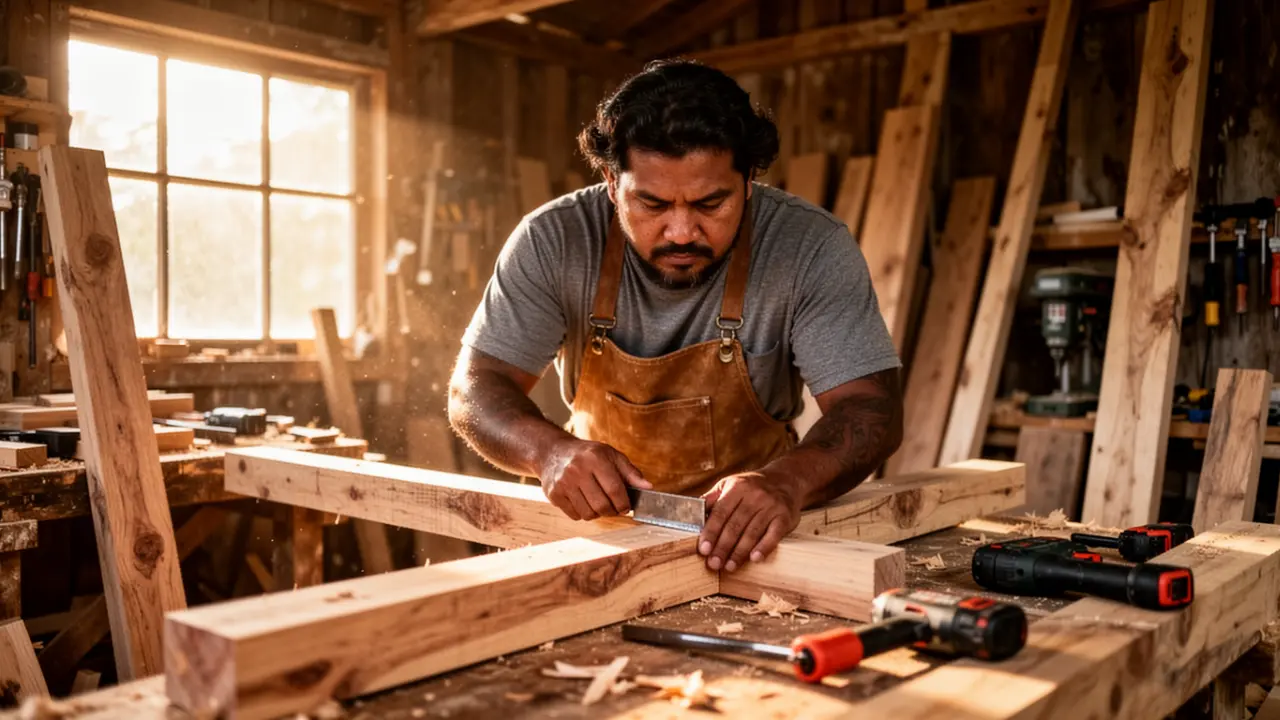
Carpenter-Tested: Picks that glide on subfloors, grip dusty shops, and hold up to framing days—without giving up EH safety.
Skip to #1 indoor comfort pick — Thorogood American Heritage 6″Carpenters spend hours on subfloors, ladders, and concrete — so choosing the right carpenter boots affects comfort, safety, and long-term joint health. If most of your shifts are on hard slabs, see our full guide to work boots for standing on concrete floors for deeper cushioning insights. The best work boots for carpenters balance concrete comfort, clean traction on sawdust, and the right toe/EH protection without slowing you down. Below are proven picks for framing crews, trim pros, and shop carpenters who need boots that work as hard as they do.
What Are the Best Work Boots for Carpenters?
The best work boots for carpenters combine wedge-sole comfort for subfloors, slip-resistant traction for dusty shop floors, and the right toe/EH protection for jobsite rules. For indoor trim work, wedge moc toes like the Thorogood American Heritage excel. For outdoor framing or wet conditions, waterproof composite-toe boots like the Timberland PRO Boondock are better choices.
- Indoor / finish carpentry: Wedge sole moc toes
- Outdoor framing: Waterproof composite toe
- Mixed construction: Lightweight aluminum or composite toe with EH
- Heavy rain / mud: Full waterproof membrane
Not ideal if: you’re in heavy rebar/ironwork, wildland firefighting, or oilfield rigs — those require specialized boots.
What Carpenters Need
(Framing, Finish & Shop)
- Wedge comfort: broad-contact outsoles ride smooth on subfloors and concrete, don’t trap chips like deep lugs.
- Clean traction: slip-/oil-resistant rubber that grips dusty shop floors and plywood.
- Protection: aluminum/composite/steel toe per site rules; EH-rated for power tool environments.
- Weather: waterproofing for framing/deck days; breathable liners for interior trim.
- Support: shock-diffusing midsoles + arch support for long stand/kneel cycles.
- Fit: heel locked, forefoot room for toe splay and afternoon swell.
Use-Case Matrix — Match Jobs to Features
| Scenario | Prioritize | Toe / PPE | Good Matches |
|---|---|---|---|
| Trim & shop (sawdust floors) | Wedge comfort, clean traction | Soft toe (EH) OK | Thorogood Heritage 6″, SUREWAY Moc |
| Framing outdoors / rain | Waterproof, toe protection, grip | Composite/Aluminum | Timberland Boondock |
| Uneven ground / fast in-out | Stable outsole, easy entry | Soft or safety per policy | Ariat Groundbreaker |
| General construction | EH, durable leather, cushion | Aluminum/Composite | Irish Setter Ashby |
Carpenters often spend long hours standing, kneeling, and moving across hard surfaces, which can lead to fatigue building up over time. Proper fit and support both play a role in comfort. See our guide to work boots for aching feet and our fit and foot health guide for additional support considerations.
Affiliate Disclosure: We may earn a commission if you buy through our links—at no extra cost to you. As an Amazon Associate, The Foot Facts earns from qualifying purchases. Thank you for your support!
Wedge vs Lug Soles for Carpenters
Wedge soles are the top choice for most carpenters working on plywood subfloors and concrete. They spread pressure evenly and don’t trap sawdust or chips. Lug soles are better outdoors in mud, gravel, or uneven terrain where deeper traction is required.
| Sole Type | Best For | Pros | Trade-Offs |
|---|---|---|---|
| Wedge | Interior framing, trim, concrete floors | Even pressure, clean traction, less debris buildup | Less grip in mud |
| Lug | Outdoor framing, dirt, rain | Better bite in soft ground | Can trap sawdust; less smooth on concrete |
Best Wedge Sole Carpenter Boots
Wedge sole carpenter boots are the top choice for interior framing, finish carpentry, and long concrete days. Unlike deep lug outsoles, wedge soles provide full-surface contact with the ground, distributing weight evenly across plywood subfloors and hard slabs. This reduces pressure points in the heel and forefoot — especially during 8–10 hour shifts.
For shop floors and finished interiors, wedge soles also help prevent debris buildup. Sawdust and wood chips don’t get trapped in deep tread patterns, which means better traction consistency and fewer scuff risks on completed flooring. Many carpenters prefer moc-toe wedge styles because they balance stability with flexibility during kneeling and ladder work.
If most of your work happens indoors or on clean subfloors, wedge designs like the Thorogood American Heritage and SUREWAY Moc deliver the smoothest ride. For outdoor framing in mud or rain, switch to a lug outsole — but for daily carpenter comfort on concrete and plywood, wedge soles remain the industry favorite.
Boot Weight Comparison (Per Boot)
- SUREWAY 6″ Moc: ~2.1–2.3 lbs
- Irish Setter Ashby: ~2.0–2.2 lbs
- Ariat Groundbreaker: ~2.3–2.5 lbs
- Timberland PRO Boondock: ~2.6–2.9 lbs
- Thorogood Heritage 6″: ~2.2–2.4 lbs
Lightweight Carpenter Boots for Ladder Work
When your day includes repeated ladder climbs, roof transitions, or stair work, lightweight carpenter boots reduce calf fatigue and improve balance. Once boots exceed roughly 2.5 lbs per boot, they begin to feel noticeably heavier during vertical movement — especially over 8+ hours.
Aluminum and composite toe models are often lighter than traditional steel toe options while still meeting ASTM impact and compression standards. For carpenters who need safety compliance without sacrificing agility, lightweight toe caps paired with cushioned midsoles provide the best balance.
Models like the Irish Setter Ashby and SUREWAY Moc stay under the heavier waterproof range, making them strong options for trim work and ladder-heavy days. If you’re climbing framing stacks or transitioning between levels frequently, choosing a lighter build can noticeably reduce end-of-day fatigue.
Need a fast answer? If you work mostly indoors on subfloors and concrete, start with a wedge sole. If you frame outdoors in wet or muddy conditions, jump to a waterproof composite toe. The table below makes the trade-offs clear in under 60 seconds.
Comparison Table — Best Work Boots for Carpenters
| Product | Key Points | Best For | Price |
|---|---|---|---|
| SUREWAY Wedge Moc | Goodyear welt; slip-resistant wedge; full-grain leather. | Shop & interior carpentry | |
| Irish Setter Ashby | Light aluminum toe; heat-resistant outsole; EH. | General construction; light safety | |
| Ariat Ground-breaker | Wide square toe; Duratread outsole; cushioned footbed. | Outdoor framing & yard work | |
| Timberland PRO Boondock | Waterproof; composite toe; anti-fatigue; rugged outsole. | Wet sites; harsh conditions | |
| Thorogood American Heritage | MAXWEAR Wedge; resoleable; USA-made; EH variants. | Finish carpentry & shop |
Who should skip this: If your site requires a safety toe or you’re in rain 3+ days a week, this isn’t the right pick. Scroll to Boondock instead.
SUREWAY 6″ Wedge Moc — Best for All-Day Shop & Interior Work
TFF Rating:
Best For: cabinet/trim work and interior builds needing wedge comfort and clean dust traction.
Full-grain leather on a slip-resistant wedge keeps pressure even on concrete and subfloors—and won’t trap chips like deep lugs. Minimal break-in; not waterproof.
Field notes: “No squeak on finished floors; legs felt fresher by hour 10.”
Key Features:
- Goodyear welt (resoleable)
- Slip-resistant wedge outsole
- Padded collar; shock-absorbing insole
- Breathable lining
Pros
- Smooth ride on subfloors
- Minimal break-in
- Great value for daily wear
Cons
- Not waterproof
- No factory safety toe
- Rain days: rotate to a waterproof pair (see Boondock).
- Toe rules: verify if your GC requires a safety cap on site.
Sizing & Fit: True to size; D/EE options; short break-in.
Best For (recap): shop & finish carpentry with concrete/subfloor comfort.
Irish Setter Ashby 6″ (Aluminum Toe) — Best Lightweight Safety
TFF Rating:
Best For: carpenters who want toe protection without bulk; EH on mixed indoor/outdoor days.
Aluminum toe trims weight; heat-resistant outsole handles hot tar/roof edges. Breathable and comfortable; not waterproof.
Field notes: “Easy ladder moves; no calf fatigue by the end of the day.”
Key Features:
- Aluminum safety toe (EH)
- Heat-resistant rubber-EVA outsole
- Removable cushioned footbed
- Full-grain leather upper
Pros
- Light for a safety boot
- Great interior comfort
- Solid dust traction
Cons
- Not waterproof
- Runs slightly large for some
- Fit: consider ½ size down if between sizes.
- Wet sites: swap to Boondock on rain weeks.
Sizing & Fit: Slightly long; medium/wide available.
Best For (recap): general construction needing lightweight protection.
Ariat Groundbreaker (Pull-On) — Best for Outdoor Framing
TFF Rating:
Best For: wide feet, uneven ground, quick in/out days with Duratread durability.
Roomy square toe and cushioned footbed keep you moving. Not waterproof; can feel warm in summer. Great for deck builds, yard work, and dry framing.
Field notes: “Easy on/off at the truck; stable on gravel and dirt.”
Key Features:
- Wide square toe
- Duratread outsole
- Four-layer rebound footbed
- Pull-on design
Pros
- Roomy comfort
- Fast entry/exit
- Durable outsole outdoors
Cons
- Not waterproof
- Warm in hot months
- Ankle lock: ensure snug fit; pull-ons can slip on ladders.
- Wet grass: pair with Boondock when storms hit.
Sizing & Fit: True; wide sizes available.
Best For (recap): dry outdoor framing and yard work.
Timberland PRO Boondock 6″ (Waterproof) — Best for Wet, Harsh Conditions
TFF Rating:
Best For: rainy seasons and muddy sites needing waterproof + composite toe and anti-fatigue.
Tank-tough with a waterproof membrane, rugged outsole, and shock-reducing midsole. Heavier/stompier—but that’s the trade for weatherproof durability.
Field notes: “Stayed dry through a downpour; grip was money on wet plywood.”
Key Features:
- Waterproof membrane
- Composite safety toe (EH)
- Anti-fatigue midsole
- Reinforced toe/heel
Pros
- Fully waterproof
- Great traction in the wet
- Excellent shock absorption
Cons
- Heavier than wedges
- Runs warm in summer
- Rotation: keep a lighter wedge for dry interior days.
- Dry time: use a low-heat boot dryer between shifts.
Sizing & Fit: True; roomy forefoot; short break-in.
Best For (recap): wet/harsh sites needing composite + WP.
Thorogood American Heritage 6″ — Best for Finish Carpentry & Shop
TFF Rating:
Best For: long interior days on concrete/subfloors needing maximum wedge comfort.
USA-made leather over a MAXWEAR Wedge that glides across dust and plywood. Resoleable longevity; no membrane—keep it indoors.
Field notes: “Even pressure on ladders; no debris stuck in the tread.”
Key Features:
- MAXWEAR Wedge™ outsole
- Goodyear welt (resoleable)
- EH options available
- Full-grain leather
Pros
- Outstanding concrete comfort
- Shop-friendly traction
- Classic look; rebuildable
Cons
- Not waterproof
- No safety toe (on this variant)
- Scope: switch to safety-toe model if your site requires it.
- Care: dust off daily to preserve outsole grip.
Sizing & Fit: True; D/EE; short break-in.
Best For (recap): finish carpentry & shop comfort.
Quick Picks (TL;DR)
- Indoor/shop comfort: Thorogood Heritage 6″
- Lightweight safety: Irish Setter Ashby
- Wet/harsh sites: Timberland PRO Boondock
- Budget wedge daily: SUREWAY 6″ Moc
Pro move: Many carpenters rotate between a wedge (indoor) and waterproof boot (outdoor weeks). Rotation extends lifespan and reduces joint fatigue.
Care & Maintenance for Carpenter Boots
- Sawdust control: brush seams/eyelets and wipe outsoles daily—dust polishes rubber and reduces grip.
- Wedge refresh: when wedges glaze, scrub with a crepe brush to restore bite on dusty plywood.
- Waterproof upkeep: reproof seams every 4–6 weeks in rainy seasons; avoid high heat on membranes.
- Insoles: swap every 3–6 months for concrete-heavy weeks.
- Leather diet: light condition weekly; too much oil softens support stitching.
- Drying: low-heat boot dryer; pull insoles; skip direct heat to protect adhesives.
Resoleability & Long-Term Value
Many wedge-style carpenter boots use Goodyear welt construction, meaning the outsole can be replaced when worn. Boots like the Thorogood American Heritage and SUREWAY Moc can typically be resoled 1–2 times, extending lifespan 2–3× longer than cemented-sole boots. For carpenters logging daily concrete miles, this significantly improves long-term value.
How Long Should Carpenter Boots Last?
- Daily interior concrete use: 8–14 months
- Wet framing / outdoor exposure: 6–12 months
- Resoleable wedge boots: 18–36 months with one rebuild
Longevity depends on hours worked, surface type, and maintenance. Concrete and wet plywood accelerate outsole wear, while rotating between a dry wedge and a waterproof pair can extend overall lifespan.
Soft vs Safety Toe — Which Fits Your Work?
| Toe Type | Strengths | Trade-offs | Good Matches |
|---|---|---|---|
| Aluminum / Composite | Lighter protection; EH options; cooler than steel | Slightly more cap volume than steel | Irish Setter Ashby, PRO Boondock |
| Soft Toe (EH) | Light, flexible, often most comfy | No impact cap—only if policy allows | Thorogood Heritage 6″, SUREWAY Moc |
| Steel | Compact cap, classic protection | Heavier; temp transfer | PRO Boondock (variants) |
Pro Tips for Carpenters
- Concrete miles: wedge soles + fresh insoles every 3–6 months reduce lower-back and knee fatigue. If you struggle with chronic soreness, see our guide to work boots for back pain.
- Ladders: snug the instep hooks to lock the heel; avoid over-tightening the forefoot (hotspots when kneeling).
- Sawdust slip: softer SR rubber with broad contact patches grips dusty subfloors better than shallow hard lugs.
- Water days: keep a waterproof backup (e.g., Boondock) for rain or wet framing.
- Leather care: quick brush at lunch; light condition weekly—too much oil softens support stitches.
- Verify ASTM F2413 on your exact SKU and EH marking if working near temp power/panels.
- Keep soles clean on ladders and finished floors; replace when rubber hardens/slicks.
- Pull-ons can slip on rungs—ensure tight heel lock or use lace-up for ladder-heavy days.
- Follow site PPE, ladder safety, and saw/nailer protocols.
Best Boots for Finish Carpentry Indoors
Finish carpenters working on completed interiors need boots that protect floors while staying comfortable on concrete and subfloors. The best boots for finish carpentry typically feature wedge soles, softer slip-resistant rubber, and minimal aggressive tread to avoid tracking debris across finished surfaces.
Soft toe (EH-rated where required) models are often preferred indoors because they’re lighter and more flexible when kneeling, installing trim, or working cabinets. Deep lug outsoles can leave marks on delicate flooring and trap sawdust, which reduces traction consistency inside controlled environments.
For interior trim, cabinetry, and shop builds, moc-toe wedge boots like the Thorogood American Heritage provide the smoothest contact patch and long-day comfort. If your site requires safety toes, lightweight aluminum options like the Irish Setter Ashby offer protection without adding unnecessary bulk.
Sock Pairing & Footcare (Carpenters)
- Daily: mid-weight merino crew for moisture control and fewer blisters on subfloors.
- Hot sites: ultralight merino/cool-max; avoid cotton (holds sweat → friction).
- Long concrete shifts: cushioned heel zones + arch-support insole to soften impact.
- Fit rule: keep a thumb’s width in the toe; swelling happens by hour 8–10.
Scenario Picks — What to Wear When
| Scenario | Works Well? | Prioritize |
|---|---|---|
| Trim & shop (sawdust floors) | ✅ | Wedge comfort, clean SR traction → Thorogood Heritage, SUREWAY Moc |
| Framing outdoors / rain | ✅ | Waterproof + composite toe → Boondock |
| Uneven ground / fast in–out | ✅ | Stable outsole, easy entry → Ariat Groundbreaker |
| General construction | ✅ | EH, durable leather, light safety toe → Irish Setter Ashby |
Related Guides
- Best Work Boots for Back Pain
- Best Boots for Flat Feet
- Best Work Boots for Roofing
- Best Wedge Sole Work Boots
- Best American-Made Work Boots
Safety & Standards
On mixed carpentry sites, verify ASTM F2413 compliance on your exact model and confirm any EH marking if you’re working near power tools or temporary panels. See the official ASTM F2413-24 Standard Specification for Performance Requirements for Protective (Safety) Toe Cap Footwear and OSHA Foot Protection (29 CFR 1910.136) for current requirements.
Final Verdict
Top overall (value + comfort): SUREWAY 6″ Moc Toe. Light safety toe (dry sites): Irish Setter Ashby. Outdoor framing/pull-on: Ariat Groundbreaker. Wet/harsh conditions: Timberland PRO Boondock. Shop/finish work: Thorogood American Heritage.
Specialized Carpenter Boot Scenarios
- Winter framing: insulated waterproof composite toe (see winter carpenter boots guide).
- Concrete-heavy builds: wedge sole with shock-absorbing midsole.
- Finish carpentry indoors: soft toe wedge to prevent floor scuffing.
- Lightweight preference: aluminum toe under 2.3 lbs per boot.
FAQ — Carpenter Work Boots
What’s the best sole for carpentry on subfloors?
Wedge soles spread pressure evenly and don’t dig into plywood, making them ideal for framing and subfloor work. Lug soles are better outdoors in mud or uneven terrain.
Are aluminum toes safe enough for carpenters?
Yes. Aluminum toes meet ASTM impact/compression standards, but they’re lighter than steel. They’re a good match for carpenters who need agility on ladders and stairs.
Which boots are best for finish carpentry indoors?
Look for wedge-sole moc toes like Thorogood Heritage. They’re comfortable on concrete and won’t scuff finished floors as easily as deep-lug soles.
Should carpenters choose waterproof boots?
If you’re mostly indoors, waterproof membranes can run hot. For outdoor framing and deck building, waterproof picks like the Timberland PRO Boondock keep you dry in wet sites.
How heavy is too heavy for carpenter boots?
Anything over 2.5 lbs per boot starts to feel clunky on ladders. Lightweight composite/aluminum toe models reduce fatigue over 8–10 hours.
Do carpenters need EH-rated boots?
If you’re using power tools, compressors, or working near temporary wiring, EH rating adds extra shock protection. Not mandatory everywhere, but smart insurance.
What’s the break-in time for leather carpenter boots?
Most Goodyear-welted leather boots take 3–5 days of wear to soften. Conditioning and wearing thick socks can speed the process.
How We Test — Subfloors, Ladders & Concrete
We test on plywood decks, dusty shop floors, concrete corridors, and ladders. Scores blend on-foot wear, spec checks, and carpenter feedback. We weight traction on dust, cushioning, waterproofing/breathability, EH/toe protection, and weight.
Field Experience: We rotated these boots across two weeks of interior trim work and outdoor framing, including ladder climbs, wet plywood decks, and long concrete corridor installs. Wedge soles consistently reduced end-of-day knee and lower-back fatigue on finished floors, while lug outsoles provided better bite during muddy framing days. Weight and heel stability mattered most on ladder-heavy shifts.
| Model | Dust Traction | Comfort | WP/Breathable |
|---|---|---|---|
| SUREWAY 6″ Moc | Very Good | Very Good | Non-WP / Breathable |
| Irish Setter Ashby | Very Good | Very Good | Non-WP / Breathable |
| Ariat Groundbreaker | Good | Very Good | Non-WP / Warm |
| PRO Boondock | Excellent | Very Good | Waterproof / Warm |
| Thorogood Heritage | Excellent | Excellent | Non-WP / Breathable |
About the Author & Testing
Compiled by The Foot Facts with input from framing and finish carpenters. We evaluate traction, shock absorption, durability, waterproofing/breathability, and fit with on-foot wear where noted.
If your boots help you forget your feet for a whole shift, that’s the win. Build well—and take care of the gear that takes care of you.