Best waterproof work boots — breathable membranes, sealed seams, and wet-surface traction designed to keep feet dry during construction, plumbing, landscaping, and delivery work.
Evaluated for waterproof membranes, seam sealing, wet-floor traction, and breathability during long shifts in rain, mud, and wash-down job sites.
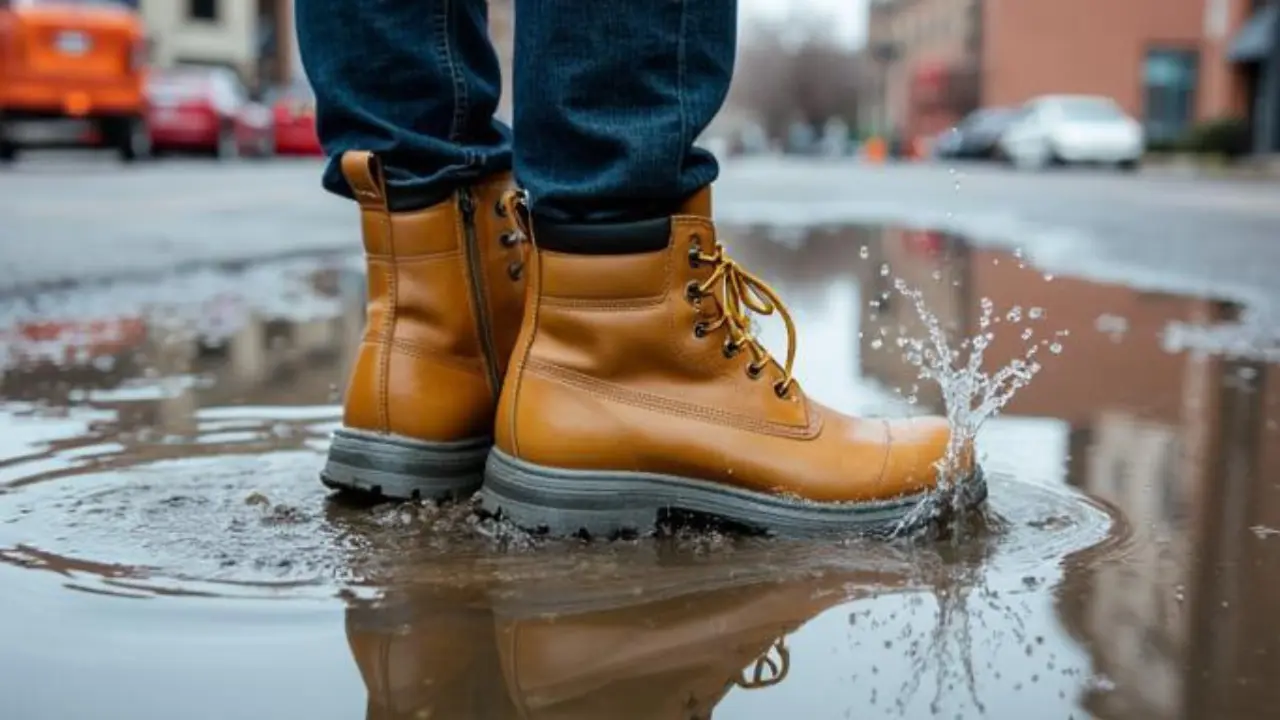
Rain-Tested: Picks that keep water out, breathe on the clock, and grip on soaked concrete.
Skip to top pick — Wolverine OverpassEver had your boots give up mid-shift and flood your socks? The best waterproof work boots seal out water and breathe, keep traction on slick floors, and protect toes without feeling like bricks. Below, five picks that actually stay dry and go the distance.
Many waterproof boots are designed for wet concrete and industrial floors where traction and cushioning matter just as much as waterproofing. If your shifts involve long hours on hard surfaces, see our guide to the best work boots for standing on concrete floors.
What Are the Best Waterproof Work Boots in 2026?
Quick Answer
The best waterproof work boots combine breathable waterproof membranes, sealed seams, and slip-resistant outsoles that maintain traction on wet concrete and muddy job sites. High-quality waterproof boots also include gusseted tongues to prevent leaks around laces and durable leather uppers that shed water while allowing moisture to escape during long shifts.
- Breathable waterproof membranes
- Seam-sealed leather uppers
- Slip-resistant wet-grip outsoles
- Gusseted tongues to block water entry
- Best overall waterproof: Wolverine Overpass
- Best budget waterproof: Wolverine Floorhand
- Best lightweight option: Nasogetch
- Best for cold wet work: EVERBOOTS Ultra Dry
- Best traction on wet floors: CAT Threshold
Are Waterproof Work Boots Actually Breathable?
Many modern waterproof work boots are breathable because they use waterproof membrane liners that block liquid water while allowing water vapor from sweat to escape. Technologies like breathable waterproof booties and sealed seam construction keep rain out while preventing moisture buildup inside the boot during long shifts.
However, breathability varies widely. Full-grain leather boots with waterproof membranes typically balance durability and airflow best, while cheaper waterproof coatings may trap heat and sweat. For hot environments, look for waterproof boots that combine breathable membranes with moisture-wicking linings and ventilated midsoles.
Why Trust This Guide
- Evaluated using waterproof membrane integrity, seam sealing, and gusset construction.
- Incorporates feedback from construction workers, landscapers, plumbers, and warehouse teams working in wet environments.
- Safety specifications verified against ASTM F2413 safety-toe standards and EH ratings where applicable.
- Updated twice per year to reflect product changes, field feedback, and new waterproof technologies.
Some construction jobs involve far more water exposure than rain or mud alone. Crews working with wet cement or slurry often require tall waterproof boots designed specifically for those environments. See our guide to boots for pouring concrete used on active construction pours.
Waterproof Basics
What Actually Keeps Feet Dry
- Membranes: breathable waterproof booties (e.g., Storm Defender/DRY-BREATHABLE types) block liquid water but vent sweat.
- Seam sealing & gussets: sealed seams + bellows tongue stop water creeping in at lace rows.
- Uppers: full-grain leather sheds water better than cheap splits; mesh needs a membrane to be truly waterproof.
- Outsoles: wet-rated rubber + siping keep contact on slick concrete and steel grating.
- Toe type: composite/alloy won’t conduct temp or electricity; look for ASTM F2413 + EH where required.
Waterproof Steel Toe vs Composite Toe Boots
Waterproof work boots are available with both steel and composite safety toes. Steel toes provide maximum impact protection and durability, while composite toes are lighter and non-conductive, which can be useful in electrical environments where EH-rated footwear is required.
Many workers prefer composite safety toes in waterproof boots because they reduce weight and do not conduct cold temperatures during wet winter shifts. However, both steel and composite options can meet ASTM F2413 safety standards when properly certified.
Match Wet Scenario to Features
| Scenario | Prioritize | Toe / EH | Good Matches |
|---|---|---|---|
| Industrial: water, grit, ladders | Breathable WP membrane, flex forefoot | Composite; EH | Wolverine Overpass |
| Budget daily wet work | Full-grain leather, sealed seams | Steel; EH optional | Wolverine Floorhand |
| Indoor/warehouse with splashes | Lightweight, slip-resistant, water-resistant | Steel; EH | Nasogetch |
| Cold, wet field work | Insulated liner + WP membrane, deep lugs | Soft toe or safety toe per site | EVERBOOTS Ultra Dry |
| Slippery uneven terrain | Wet-rated slip outsole, stable chassis | Steel; EH | CAT Threshold |
- Wolverine Overpass: best overall waterproof for industrial movement
- Wolverine Floorhand: best budget waterproof leather
- Nasogetch: lightest feel for indoor splashes
- EVERBOOTS Ultra Dry: best cold/wet field work
- CAT Threshold: best wet-surface slip grip
Comparison Table
Best Waterproof Work Boots
| Product | Why it’s good (WP build) | Best For | Price |
|---|---|---|---|
| Wolverine Overpass | Breathable WP membrane + Contour Welt® flex; composite toe. | Demanding industrial work | |
| Wolverine Floorhand | Waterproof full-grain leather + moisture-wicking liner; steel toe. | Budget daily wet work | |
| Nasogetch | Lightweight, breathable uppers; puncture-resistant plate; steel toe. | Indoor/warehouse with splashes | |
| EVERBOOTS ULTRA DRY | Waterproof membrane + insulated lining; Goodyear welt. | Cold & wet outdoor field work | |
| CAT Threshold | Seam-sealed leather; slip-resistant wet-grip outsole; steel toe + EH. | Slippery, uneven job sites |
Wolverine Overpass 6″ — Best for Demanding Industrial Work
TFF Rating:
Best For: wet/dirty industrial, frequent crouching & ladder work.
Contour Welt® flexes where your foot bends; breathable WP membrane and composite toe keep weight down. Great balance of protection and mobility.
Field notes: “Trench pumps running, slurry everywhere—tongue gusset held; feet stayed dry through the shift.”
Key Features:
- Breathable waterproof membrane + sealed gusset
- Contour Welt® construction for flex
- Composite safety toe (ASTM F2413), EH
Pros
- Excellent waterproofing with real flex
- All-day comfort under load
- Good wet-surface traction
Cons
- Narrow toe box for very wide feet
- Short break-in at the vamp
- Over-oiling leather: can hinder breathability—use light conditioners.
- Lace channel: keep eyelet rows clean; grit abrades membrane gussets.
Sizing & Fit: True length; medium width. Wide-footed users may prefer EW.
Best For (recap): construction, plumbing, industrial maintenance.
Wolverine Floorhand — Best Budget Waterproof Protection
TFF Rating:
Best For: general labor, landscaping, delivery in wet conditions.
Waterproof full-grain leather with moisture-wicking liner and steel toe. No-frills daily driver that stays dry if you keep seams conditioned.
Field notes: “Rain day routes and wet lawns—dry socks; swapped insoles to boost arch support.”
Key Features:
- Waterproof full-grain leather + sealed seams
- Steel safety toe (ASTM F2413)
- Slip-resistant rubber outsole
Pros
- Great waterproof value
- Durable leather upper
- Reliable steel-toe protection
Cons
- Basic arch support
- Sole life varies with heavy abuse
- Neglected conditioning: seam tape dries/cracks—condition lightly.
- Standing water: prolonged submersion exceeds design; reproof regularly.
Sizing & Fit: True to size; medium volume.
Best For (recap): budget-friendly waterproofing for moderate job sites.
Nasogetch Waterproof Steel Toe — Best Lightweight Indoor/Warehouse
TFF Rating:
Best For: fast-paced indoor work with occasional splashes/spills.
Light uppers with water resistance handle surprise puddles; puncture-resistant plate + steel toe cover basics. Not a trench boot—wins on weight and breathability.
Field notes: “Spill cleanup on polished concrete—no leaks, decent grip, stayed light on stairs.”
Key Features:
- Lightweight water-resistant uppers
- Puncture-resistant plate
- ASTM steel toe
Pros
- Very light for long shifts
- Breathes better than full leather
- Good value
Cons
- Not truly waterproof when submerged
- Minimal insulation
- Hose lines/constant rain: choose full membrane models instead.
- Toe bumps: steel cap feels rigid in tight vehicles.
Sizing & Fit: True to size; accommodating forefoot.
Best For (recap): warehouse, drivers, light service work.
EVERBOOTS ULTRA DRY — Best for Cold & Wet Outdoor Conditions
TFF Rating:
Best For: muddy sites, winter rain, slush-heavy mornings.
Insulated lining + WP membrane keep feet warm and dry; Goodyear welt adds longevity. Bulky indoors, but confidence outdoors.
Field notes: “Road-shoulder dig in sleet—no seep at the gusset; tread cleared slush well.”
Key Features:
- Waterproof/breathable membrane + insulation
- Goodyear welt construction
- Soft toe (check site PPE needs)
Pros
- Warm + dry in cold rain
- Durable welted build
- Strong mud/slush traction
Cons
- Runs slightly large
- Bulky for tight indoor aisles
- Overheat indoors: crack laces at breaks to vent.
- Drying: use low-heat boot dryers; avoid direct heaters.
Sizing & Fit: Slightly large; many size down ½.
Best For (recap): outdoor utility, winter field service, muddy lots.
CAT Men’s Threshold — Best for Slippery, Uneven Job Sites
TFF Rating:
Best For: wet concrete/tile, mixed indoor/outdoor terrain.
Seam-sealed waterproof leather, steel toe + EH, and a wet-rated slip outsole that feels planted when things get slick.
Field notes: “Wash-down floors every night—noticeably fewer slips; break-in was short.”
Key Features:
- Seam-sealed waterproof leather
- Steel toe (ASTM F2413) + EH
- High-friction wet-grip outsole
Pros
- Excellent wet-surface grip
- Dependable waterproofing
- Minimal break-in
Cons
- Runs warm in hot climates
- Less ideal for narrow feet
- Soap film: rinse soles; film defeats traction on smooth tile.
- Heat waves: rotate with a breathable pair.
Sizing & Fit: True to size; medium-wide volume.
Best For (recap): plumbers, mechanics, facilities on wet floors.
Quick Picks (TL;DR)
- Best overall waterproof: Wolverine Overpass
- Best budget leather: Wolverine Floorhand
- Best lightweight indoor: Nasogetch
- Best cold/wet field: EVERBOOTS Ultra Dry
- Best wet-floor grip: CAT Threshold
Sock Pairing & Add-Ons (Stay Dry & Comfy)
- Merino/synthetic socks move moisture; avoid cotton.
- Vent insoles: perforated/anti-microbial insoles speed dry-back.
- Mid-shift sock swap on storm days to reset dryness.
- Gaiters keep rain/debris from collar on deep puddle days.
Care & Maintenance (Waterproof)
- Rinse & soft-brush mud/salt after shifts; salt kills seam tape.
- Dry right: pull insoles; use low-heat boot dryers; avoid radiators.
- Reproof leather (wax/oil-based WP) lightly every few weeks.
- Gusset check: inspect bellows tongue & eyelets for wear—common leak path.
- Rotate pairs to preserve midsole rebound and membrane performance.
Surface & Duty Matrix (Wet Work)
| Scenario | What Works Best | Notes |
|---|---|---|
| Wet, dusty concrete | Wet-rated rubber + siping | Keep lugs clean; dust film kills friction. |
| Standing water | Full membrane + tall gusset | Avoid submersion above gusset height. |
| Oily floors | SR oil-resistant compound | Wipe spills fast; soap films are slippery. |
| Rain + cold | Membrane + light insulation | Vent at breaks to prevent sweat chill. |
- Confirm ASTM F2413 toe/EH on your exact model.
- Composite toes don’t conduct electricity or temp; useful around live circuits.
- Wet-floor traction matters as much as waterproofing—check SR ratings and keep soles clean.
Safety & Standards
Match footwear to your site hazard assessment. Look for ASTM F2413 toe protection and EH where required. See OSHA Foot Protection (29 CFR 1910.136).
Final Verdict
Best overall waterproof: Wolverine Overpass. Budget leather: Wolverine Floorhand. Lightweight indoor: Nasogetch. Cold/wet field: EVERBOOTS Ultra Dry. Wet-floor grip: CAT Threshold.
FAQ — Waterproof Work Boots
Are all “waterproof” boots breathable?
No. True waterproof-breathable boots use a membrane bootie + sealed seams. Waxed leather alone resists rain but can trap sweat.
Steel vs. composite toe in wet work?
Both meet ASTM F2413. Composite is lighter and non-conductive (nice for EH and cold/wet). Steel is rugged but conducts temp.
How do I stop leaks at the tongue?
Choose a bellows gusset that reaches above splash height and keep eyelet rows clean so grit doesn’t abrade the membrane.
Can I restore waterproofing?
Yes—clean, dry, then apply a compatible leather re-proofer (or DWR spray for fabric). Don’t over-oil; it can block breathability.
Do I need EH on wet sites?
Often yes. EH-rated outsoles add protection against incidental contact; pair with composite toes when working around live circuits.
How We Test
Waterproof Methodology & Scoring
We check leak paths (eyelets/gussets), breathability during 10–12h shifts, wet-surface slip on dusty/soapy concrete, and comfort & durability after flex cycles.
| Model | Waterproofing | Breathability | Wet Slip Grip | Comfort (All-Day) | Durability |
|---|---|---|---|---|---|
| Wolverine Overpass | Excellent | Very Good | Very Good | Very Good | Very Good |
| Wolverine Floorhand | Very Good | Good | Good | Good | Good |
| Nasogetch | Good | Very Good | Good | Good | Fair |
| EVERBOOTS Ultra Dry | Very Good | Good | Very Good | Very Good | Very Good |
| CAT Threshold | Very Good | Fair | Excellent | Good | Very Good |
About the Author & Testing
Compiled by The Foot Facts with input from plumbers, utility techs, warehouse teams, and site supers. We evaluate membrane integrity, breathability, wet-floor traction, and long-shift comfort. Fit notes blend spec sheets, verified user feedback, and wear tests where noted.
End of a rain-soaked shift, if your socks are still dry and your footing sure—that’s the boot that earned its place. — Tony